A Balanced Meal Plan for Women Who Train
A protein-forward meal structure for women training regularly, with a sample day, carbohydrate timing, and the signs of underfueling that mean you should eat more, not less.
The short answer
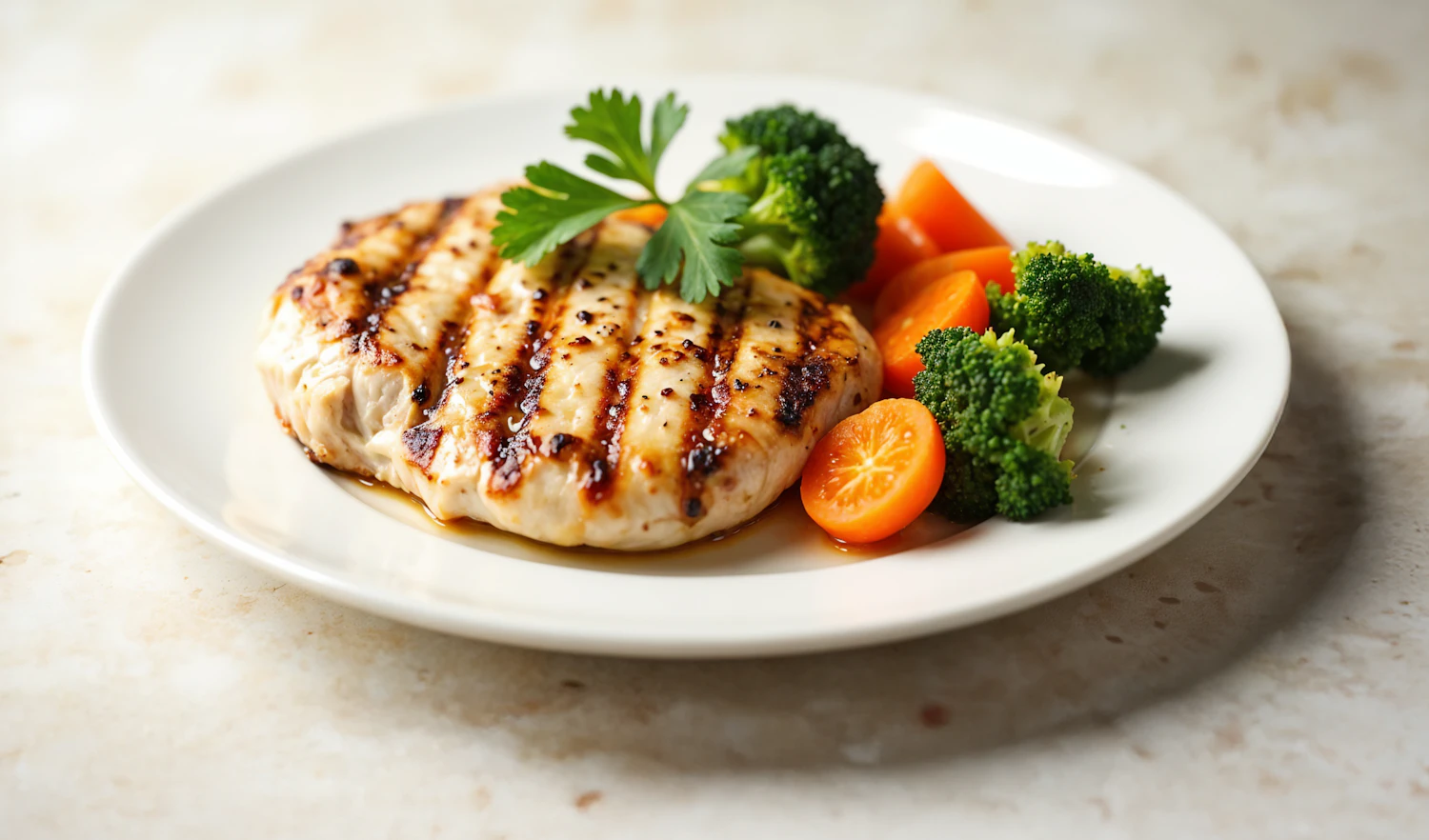
Build three or four meals a day around a protein food, fill about half the plate with vegetables and fruit, size the starchy carbohydrate to that day’s training, and include a source of fat. Keep any calorie deficit modest, keep lifting, and treat missed periods or stalled training as signs to eat more.
Key takeaways
- Spreading protein across three or four meals supports muscle maintenance better than eating little all day and correcting at dinner.
- The adult protein RDA of 0.8 grams per kilogram of body weight is a floor for the general population, not a target for people training regularly in a calorie deficit.
- The MyPlate structure still applies while training: half the plate vegetables and fruit, the rest split between protein foods and grains, with training changing the portions rather than the shape.
- Carbohydrate should be concentrated around hard sessions and reduced on rest days, rather than cut across the board.
- Sustained low energy availability can lead to RED-S, affecting hormones, bone density, immunity, mood, and performance, and it occurs at every body size.
- Periods becoming irregular or stopping is an early warning sign of underfueling and warrants a doctor visit, not acceptance as normal for athletes.
- A registered dietitian nutritionist (RD or RDN) is the regulated credential for individualized nutrition advice; "nutritionist" alone is not consistently regulated in the United States.
- Call 911 for chest pain, trouble breathing, fainting, a seizure, or an irregular heartbeat that does not settle during or after training.
Getting leaner while training regularly is less about a strict diet than about a repeatable structure: enough protein to support the work you are doing, enough carbohydrate to fuel it, enough total food that you recover, and a modest deficit you can hold for months rather than days.
This is a framework, not a prescription. It cannot promise a particular result, because individual responses vary a great deal. What it can do is describe the structure that supports training instead of undermining it, and flag the point at which eating less starts costing you more than it returns.
What does a balanced meal plan for getting lean look like?
It looks like three or four meals, each built around a protein food, with vegetables or fruit filling about half the plate, a starchy carbohydrate portion sized to that day's training, and a source of fat such as olive oil, nuts, avocado, or eggs. The overall calorie intake sits modestly below what you burn.
That structure comes straight from the USDA's MyPlate model, which is the simplest visual translation of the Dietary Guidelines for Americans: half the plate vegetables and fruit, the other half split between protein foods and grains, with at least half of those grains whole. Training changes the portions, not the shape.
Nothing here requires special products, meal timing windows, or eliminating a food group. Consistency across ordinary weeks does more than any single clever choice.
How much protein do you need, and how should you spread it?
The adult RDA for protein is 0.8 grams per kilogram of body weight, which is a floor for avoiding deficiency in the general population rather than a performance target. People training regularly, especially in a calorie deficit, generally do better above that level, and protein is the nutrient most consistently under-eaten by women who lift.
Distribution matters as much as the daily total. Putting a palm-sized serving of a protein food at the center of each of three or four meals tends to support muscle maintenance better than eating little all day and correcting at dinner. It also helps with fullness, which makes a deficit easier to hold.
Protein foods that work at any meal
- Eggs, Greek yogurt, cottage cheese, milk, or a fortified soy alternative
- Chicken, turkey, lean beef or pork
- Fish and shellfish, including canned tuna and salmon
- Tofu, tempeh, edamame, lentils, and beans
- A protein powder if it fits your schedule, treated as a convenience rather than a requirement
Plant proteins work fine; they simply come packaged with more carbohydrate and fiber, so portions look different on the plate.
What does a sample day look like?
Here is one training day laid out. Portions are described rather than weighed, because the structure is the point.
| Meal | What is on the plate | Why it is there |
|---|---|---|
| Breakfast | Greek yogurt with berries, oats, and a small handful of nuts; or eggs with whole-grain toast and sautéed vegetables | Protein early, when it is most often skipped; fiber from oats or produce |
| Lunch | Grain bowl: chicken, tofu, or beans over rice or quinoa, with a large portion of vegetables and olive oil or avocado | Protein plus carbohydrate to carry you into an afternoon session; fat for satiety |
| Pre-training snack | Fruit with yogurt or nut butter, or a slice of toast with honey, one to two hours before | Readily available carbohydrate so the session does not fall apart |
| Post-training | A protein-containing meal or shake within a few hours, with carbohydrate alongside | Supports recovery and refills muscle glycogen |
| Dinner | Fish, chicken, eggs, or lentils; half the plate vegetables; a moderate portion of sweet potato, pasta, or rice | Completes the day's protein and replaces the carbohydrate used in training |
| Optional evening | Cottage cheese, milk, or yogurt with fruit | Adds protein and helps if you wake up hungry |
Vegetables filling roughly half the plate at lunch and dinner adds volume, fiber, and micronutrients for relatively few calories, which is genuinely helpful during a deficit. The Nutrition Facts Daily Value for fiber is 28 grams, and most Americans do not reach it.
How should you time carbohydrates around training?
Put more carbohydrate on the days and around the sessions where you need it, and less on easy days. Carbohydrate is the fuel your body uses most readily for hard efforts, and cutting it aggressively usually shows up as flat, heavy training rather than faster progress.
- Before hard sessions: a carbohydrate-containing meal a few hours out, or a small snack one to two hours before.
- After hard sessions: carbohydrate with protein, in whatever form you will actually eat.
- On rest or light days: keep protein and vegetables constant and let the starch portion shrink a little.
This is shifting emphasis, not eliminating a macronutrient. Very low-carbohydrate approaches can work for fat loss in some people, but they are a poor match for high-intensity or high-volume training in most cases.
Are you eating enough?
This is the question most often skipped, and it matters more than any other detail on this page. Training hard while eating too little produces low energy availability, meaning not enough energy left over for normal body functions after the training is paid for.
Sustained low energy availability is the driver of RED-S (Relative Energy Deficiency in Sport), a syndrome that affects hormones, bone, immunity, mood, and performance. The older term for the related pattern in women was the female athlete triad: low energy availability, menstrual disruption, and reduced bone density. It occurs at every body size, and it is not limited to elite athletes.
| Sign | What it may indicate | What to do |
|---|---|---|
| Periods become irregular, lighter, or stop | A common early marker of low energy availability | See your doctor. This is not a normal consequence of training hard |
| Strength or performance stalls or declines despite consistent training | Underfueling or inadequate recovery | Increase intake, especially carbohydrate and total calories, before adding training |
| Persistent fatigue, poor sleep, low mood, or irritability | Energy deficit affecting hormones and recovery | Reassess intake; consider a smaller deficit or a maintenance phase |
| Getting sick more often, or wounds healing slowly | Immune effects of prolonged low intake | Talk to your doctor and increase energy intake |
| A stress fracture, or bone pain that worsens with impact | Possible reduced bone density | Stop the aggravating activity and get medical assessment promptly |
| Feeling cold constantly, hair thinning, resting heart rate dropping unusually low | Metabolic adaptation to sustained underfueling | Seek medical care rather than restricting further |
If several of these are present, the answer is more food, not more discipline.
How big a deficit makes sense while training?
A modest one. Larger deficits produce faster early weight change but tend to cost you training quality, recovery, and lean mass, which is the opposite of what "getting lean" usually means.
Two practical guardrails help. First, run a deficit in blocks rather than indefinitely, returning to maintenance intake for stretches, particularly if training volume is high. Second, judge progress by how you train and how clothes fit as well as by the scale, since body weight moves with fluid, glycogen, and cycle phase from day to day.
Keep resistance training in the plan throughout. The Physical Activity Guidelines for Americans recommend muscle-strengthening activity on at least two days a week alongside at least 150 minutes of moderate aerobic activity, and lifting is what signals the body to hold onto muscle while you are in a deficit.
What about fats, fluids, and micronutrients?
Do not cut fat too far. Dietary fat supports hormone production and the absorption of vitamins A, D, E, and K, and it makes food satisfying. Olive oil, nuts, seeds, avocado, eggs, and fatty fish are the everyday sources, while the Dietary Guidelines advise keeping saturated fat under 10% of daily calories and sodium under 2,300 mg a day.
Three nutrients deserve particular attention for women who train:
- Iron. Needs are higher for women who menstruate, and low iron shows up as fatigue and poor training tolerance. Do not supplement without testing, since too much iron is harmful.
- Calcium and vitamin D. Both matter for bone, which is already the tissue most at risk when energy intake is low.
- Fluids. Training raises fluid needs, and even mild dehydration affects performance and is easily mistaken for hunger. Pale straw-colored urine is a reasonable everyday check.
Who should get an individualized plan?
Anyone with a medical condition, a history of disordered eating, a high training load, or specific competitive goals should work with a professional rather than a template.
Look for a registered dietitian nutritionist (RD or RDN). That credential requires an accredited degree, supervised practice, a national exam, and continuing education, and RDs are licensed or certified in most states. By contrast, "nutritionist" on its own is not a consistently regulated title in the United States, and in many states anyone can use it. Some RDs also hold a board certification in sports dietetics. Your primary care provider can refer you, and the Academy of Nutrition and Dietetics maintains a referral directory.
Individualized input is especially worth it if you are pregnant or breastfeeding, managing diabetes, have kidney or thyroid disease, follow a fully plant-based diet, or are recovering from an injury.
When should you talk to a doctor?
Make an appointment if your periods become irregular or stop, if you develop bone pain that worsens with impact, if fatigue persists despite adequate sleep, if you are getting sick unusually often, or if you feel lightheaded during training. Missed periods in particular warrant evaluation rather than being written off as normal for athletes.
Call 911 for chest pain or pressure, trouble breathing, fainting or collapse, a seizure, or a fast or irregular heartbeat that does not settle. Also seek urgent care for confusion or a severe headache during or after exercise.
If food or training has started to feel compulsive, guilt after eating, exercising to compensate for meals, a shrinking list of acceptable foods, hiding what you eat, or skipping social events because of food, that is worth raising with a clinician now rather than later. The National Eating Disorders Association offers free, confidential screening and referral resources, and if you are having thoughts of harming yourself, call or text 988 for the Suicide and Crisis Lifeline. Eating disorders are common in people who train, they are treatable, and they occur at every body size.
Common questions
- How much protein should a woman eat to get lean?
- The adult RDA is 0.8 grams per kilogram of body weight, but that is a minimum to prevent deficiency rather than a training target, and people who lift in a calorie deficit generally do better above it. A practical approach is a palm-sized serving of a protein food at each of three or four meals, which also helps with fullness.
- What should I eat before and after a workout?
- Before a hard session, eat a carbohydrate-containing meal a few hours out or a small snack such as fruit or toast one to two hours before. Afterward, have carbohydrate with protein in whatever form you will actually eat, within a few hours. Precise timing windows matter far less than total daily intake and consistency.
- Do I need to cut carbs to lose fat?
- No. Fat loss depends on overall energy balance, not on removing a specific macronutrient, and carbohydrate is the fuel your body uses most readily for hard training. Cutting it sharply usually shows up as flat, heavy sessions. A better approach is concentrating carbohydrate around training and reducing the starch portion on rest days.
- What are the signs I am not eating enough while training?
- Common signs include periods becoming irregular or stopping, strength or performance stalling despite consistent training, persistent fatigue and poor sleep, low mood or irritability, frequent illness, feeling cold constantly, hair thinning, and stress fractures. Several of these together suggest low energy availability, and the answer is more food and a doctor visit, not more discipline.
- What is RED-S?
- RED-S stands for Relative Energy Deficiency in Sport. It describes what happens when sustained low energy availability, meaning too little energy left after training is accounted for, disrupts hormones, bone health, immunity, metabolism, mood, and performance. The earlier related term for women was the female athlete triad. It affects recreational as well as elite athletes and occurs at every body size.
- Should I lift weights while trying to get lean?
- Resistance training is what signals your body to hold onto muscle during a calorie deficit, so it is worth keeping in the plan throughout. The Physical Activity Guidelines for Americans recommend muscle-strengthening activity on at least two days a week alongside at least 150 minutes of moderate aerobic activity, which is a reasonable baseline to build from.
- Is a nutritionist the same as a dietitian?
- No. A registered dietitian nutritionist (RD or RDN) has completed an accredited degree, supervised practice, and a national exam, and is licensed or certified in most states. "Nutritionist" is not a consistently regulated title in the United States, and in many states anyone may use it. For individualized plans, look specifically for the RD or RDN credential.
Sources
Published research and guidance this page draws on. Check the original where a detail matters to you.
- 1MyPlate: building a balanced plateU.S. Department of Agriculture
- 2Dietary Guidelines for Americans, 2020-2025U.S. Departments of Agriculture and Health and Human Services
- 3Physical Activity Guidelines for Americans, 2nd editionU.S. Department of Health and Human Services
- 4Iron: fact sheet for consumersNIH Office of Dietary Supplements
- 5Calcium: fact sheet for consumersNIH Office of Dietary Supplements
- 6Food Labeling and Nutrition: protein, fiber, and % Daily ValueU.S. Food and Drug Administration
- 7Physical Activity Basics for AdultsCenters for Disease Control and Prevention
- 8Find a registered dietitian nutritionistAcademy of Nutrition and Dietetics
- 9Screening tool and eating disorder support resourcesNational Eating Disorders Association
- 10988 Suicide and Crisis Lifeline988 Suicide and Crisis Lifeline
This article is for general education and is not a substitute for professional medical advice. Speak with a qualified healthcare provider about your individual circumstances.
About HealthPathCore
An independent health knowledge library
Every article here is built from published research and guidance issued by named health bodies, written in plain language, and dated so you can see how current it is. When the evidence moves, we come back and correct the piece.
How we research and write