Protein 101: How Much Protein Do You Actually Need?
The RDA for protein is 0.8 grams per kilogram of body weight, and most Americans already exceed it. Here is what that means in real portions, and whether you need a shake.
The short answer
The Recommended Dietary Allowance for protein is 0.8 grams per kilogram of body weight a day for adults, about 0.36 grams per pound, or roughly 54 grams for a 150-pound person. Most Americans already meet or exceed this, so the useful question is usually where your protein comes from rather than how much.
Key takeaways
- The RDA for protein is 0.8 grams per kilogram of body weight a day, which is about 54 grams for a 150-pound adult.
- The RDA is a floor that covers nearly all healthy adults, not an optimal target and not a ceiling.
- The Dietary Guidelines for Americans report that protein intake meets or exceeds recommendations for most of the U.S. population.
- The Dietary Guidelines advise adolescent boys and adult men to shift protein toward seafood, beans, lentils, nuts and seeds rather than eating more total protein.
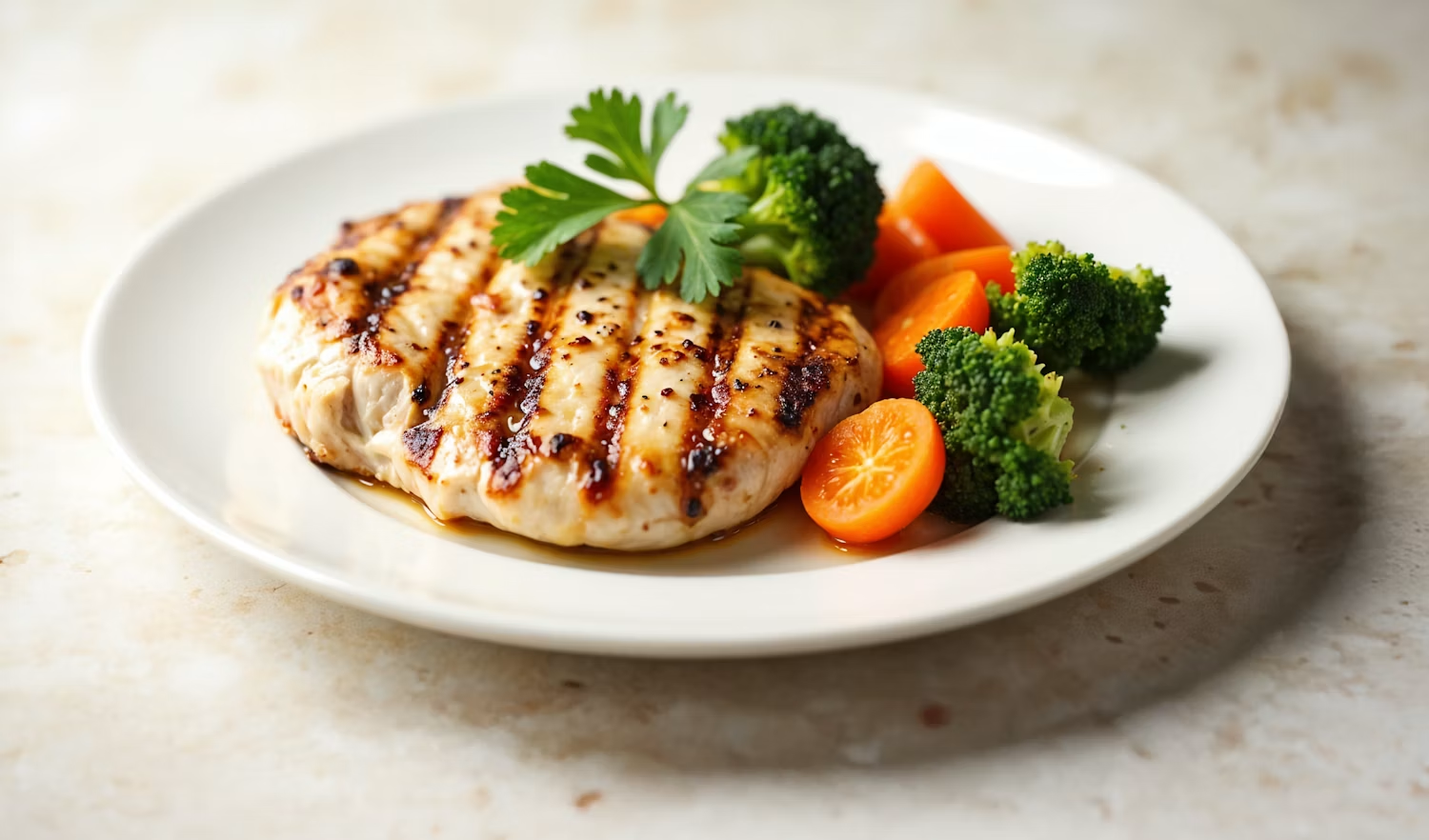
- A 3-ounce cooked portion of chicken supplies about 26 grams of protein, and a cup of cooked lentils about 18 grams.
- Protein powder is food in convenient form, not a supplement with its own effect, and the FDA does not approve supplements for safety or effectiveness before sale.
- Older adults and people who train regularly likely benefit from intakes above the RDA, but extra protein does not build muscle without resistance exercise.
- People with chronic kidney disease should get protein targets from a nephrologist or renal dietitian rather than from general guidance.
Protein supports muscle, bone, enzymes, immune function and the feeling of fullness that makes a meal hold you. It is genuinely important. It is also the most oversold nutrient in the American grocery store, and the numbers used in marketing are usually far above what any health body actually recommends.
Here is what the recommendation is, how much that is in food, whether you need a shake, and who genuinely needs to pay closer attention.
How much protein do you actually need a day?
The Recommended Dietary Allowance for protein is 0.8 grams per kilogram of body weight per day for adults, a figure set by the National Academies and used throughout federal nutrition guidance. That is roughly 0.36 grams per pound.
The RDA is defined as the amount that meets the needs of nearly all healthy people in a group, so it is a floor with a safety margin built in, not an optimum and not a ceiling. It applies to healthy adults generally; needs differ in pregnancy, in illness, and in serious training, which the sections below cover.
How much protein is that for my body weight?
Multiply your weight in pounds by 0.36, or your weight in kilograms by 0.8. The table below does it for common weights so you can see the scale of the number.
| Body weight | In kilograms | RDA at 0.8 g/kg |
|---|---|---|
| 130 lb | 59 kg | About 47 g a day |
| 150 lb | 68 kg | About 54 g a day |
| 170 lb | 77 kg | About 62 g a day |
| 190 lb | 86 kg | About 69 g a day |
| 210 lb | 95 kg | About 76 g a day |
For most adults that is a number reached by lunchtime plus a normal dinner. Two eggs at breakfast, a can of tuna at lunch and a chicken breast at dinner already clears the RDA for a 170-pound adult before you count the bread, beans, milk or nuts around them.
Do most Americans already get enough protein?
Yes. The Dietary Guidelines for Americans report that protein intake meets or exceeds recommendations for most of the population, and protein deficiency is uncommon in the United States outside of illness, poverty or very restricted diets.
What the Dietary Guidelines do flag is the balance within the protein group rather than the total. Adolescent boys and adult men in particular are advised to eat less meat, poultry and eggs and more seafood, beans, peas, lentils, nuts and seeds. So for most people the useful question is not "how do I get more protein" but "where is my protein coming from".
Which foods have the most protein per portion?
Animal foods carry the most protein per ounce, but beans, lentils, tofu, dairy, nuts and even grains add up faster than people expect. Values below are approximate and rounded; exact amounts vary by cut, brand and preparation, and the Nutrition Facts label is the reliable check for any packaged product.
| Food | Realistic portion | Protein (approximate) |
|---|---|---|
| Chicken breast, cooked | 3 oz (85 g) | About 26 g |
| Lean ground beef, cooked | 3 oz (85 g) | About 22 g |
| Salmon, cooked | 3 oz (85 g) | About 22 g |
| Canned tuna, drained | 3 oz (85 g) | About 20 g |
| Lentils, cooked | 1 cup | About 18 g |
| Plain Greek yogurt | 6 oz (170 g) | About 17 g |
| Black beans, cooked | 1 cup | About 15 g |
| Cottage cheese | 1/2 cup | About 12 g |
| Firm tofu | 3 oz (85 g) | About 8 g |
| Milk or fortified soy milk | 1 cup (8 oz) | About 8 g |
| Peanut butter | 2 tablespoons | About 7 g |
| Egg | 1 large | About 6 g |
| Almonds | 1 oz (28 g) | About 6 g |
| Oatmeal, cooked | 1 cup | About 6 g |
| Whole-wheat bread | 1 slice | About 4 g |
Two things stand out. A 3-ounce cooked portion is about the size of a deck of cards, which is smaller than most restaurant servings. And the small contributions from bread, oats, milk and nuts are what quietly carry a normal diet over the RDA.
Do you need a protein shake?
Almost certainly not, if you eat a normal mixed diet. Protein powder is food in a convenient form, not a supplement with an effect of its own, and there is nothing in whey or pea protein that a chicken breast, a cup of lentils or a tub of yogurt does not also provide.
Shakes are reasonable in specific situations: when appetite is poor, when chewing is difficult, when you travel constantly, after certain surgeries, or when an older adult is struggling to hit protein at breakfast. In those cases convenience is a real benefit and worth paying for.
Two cautions are worth knowing. Dietary supplements, including protein powders, are not approved by the FDA for safety and effectiveness before they go on sale, so quality varies between brands and third-party testing marks are the only practical signal you have. And many products marketed for muscle contain added caffeine, creatine, herbal blends or large doses of vitamins alongside the protein, so read the full ingredient panel rather than just the protein number on the front.
Does it matter when you eat protein?
Spreading protein across the day is probably better than concentrating it at dinner, though the effect is modest and the evidence is stronger for older adults than for younger ones. The typical American pattern is a low-protein breakfast, a moderate lunch and a very large dinner, and evening out that curve is a reasonable, low-risk change.
The "anabolic window" idea, that you must consume protein within a narrow period after training, is not well supported. Total intake across the day matters far more than the clock. If you train hard and it is convenient to eat afterward, do; if it is not, the day's total still counts.
Do athletes and older adults need more protein?
The RDA of 0.8 g/kg is set for the general healthy adult population, and several groups have needs above it. Federal guidance does not publish a separate higher number for athletes, so treat any specific figure you see in marketing with skepticism, but the direction of the evidence is reasonably clear.
- People doing regular resistance or endurance training generally benefit from intakes above the RDA to support repair and adaptation.
- Older adults lose muscle with age, and intakes somewhat above the RDA, combined with resistance exercise, appear to help preserve it. Exercise is at least as important as the protein.
- Pregnancy and breastfeeding raise protein needs; your obstetric provider or a registered dietitian can advise on your situation.
- Recovery from surgery, burns or serious illness raises needs substantially, usually under clinical supervision.
Notably, none of these groups are helped by protein without training. Extra protein does not build muscle on its own; it supports muscle built by loading it.
Can you eat too much protein?
For healthy adults, high protein intakes have not been shown to damage healthy kidneys, and that claim is often repeated more confidently than the evidence supports. The practical downsides are different: protein-heavy eating tends to crowd out fiber-rich foods, cost more, and in the case of processed and red meat comes with its own risks.
The picture changes if your kidneys are already impaired. People with chronic kidney disease are often advised to moderate protein, and that advice should come from a nephrologist or renal dietitian, not from a general article. The same applies to some liver conditions and to rare inherited metabolic disorders.
There is no established Tolerable Upper Intake Level for protein, which means the evidence was not sufficient to set one, not that any amount is proven safe.
Can you get enough protein without meat?
Yes, comfortably, if you eat a variety of plant proteins across the day. Beans, lentils, chickpeas, tofu, tempeh, edamame, nuts, seeds and whole grains together supply all the amino acids you need, and the old advice to combine specific foods at the same meal has been superseded.
Two things do need attention on a vegan diet: vitamin B12, which requires a supplement or reliably fortified foods, and iron, which is absorbed less efficiently from plants. Pairing plant iron sources with a vitamin C food such as peppers, tomatoes or citrus improves absorption meaningfully.
When should you talk to a doctor or dietitian?
Talk to your primary care provider or a registered dietitian before making a major change to your protein intake if you have kidney disease, liver disease, diabetes, are pregnant, or take medications that require dietary monitoring. Those situations need individual numbers, not general ones.
Also get checked if you are losing weight or muscle without trying, feel weak or persistently fatigued, notice swelling in your legs or around your eyes, see foamy urine, or are recovering from surgery or a long illness. The Academy of Nutrition and Dietetics keeps a directory of registered dietitian nutritionists, and many insurance plans cover visits for specific conditions.
Seek urgent care or call 911 for chest pain, sudden severe weakness on one side, trouble breathing, or the hives and throat swelling of a severe allergic reaction, which can happen with dairy, soy, nut and shellfish proteins.
Common questions
- How much protein do I need per day to build muscle?
- More than the RDA of 0.8 grams per kilogram, though federal guidance does not publish a specific athlete figure, so be skeptical of precise numbers in marketing. The stronger point is that protein only supports muscle that resistance training stimulates. Consistent strength work plus protein spread across meals matters more than any exact gram target.
- How much protein is in a chicken breast?
- A 3-ounce cooked portion of chicken breast, about the size of a deck of cards, contains roughly 26 grams of protein. A whole large chicken breast is often six to eight ounces, so it can supply 50 grams or more on its own, which is close to a full day of the RDA for many adults.
- Do I really need a protein shake?
- Most people do not. If you eat a mixed diet, you almost certainly already reach the RDA from food, and there is nothing in protein powder that food does not provide. Shakes are genuinely useful when appetite is poor, chewing is hard, you travel constantly, or an older adult struggles to eat protein at breakfast.
- Is too much protein bad for your kidneys?
- In healthy adults, high protein intake has not been shown to damage healthy kidneys, despite how often that claim is repeated. The picture is different if your kidneys are already impaired. People with chronic kidney disease are frequently advised to moderate protein, and that target should come from a nephrologist or renal dietitian.
- Can you get enough protein on a vegan diet?
- Yes. Beans, lentils, chickpeas, tofu, tempeh, edamame, nuts, seeds and whole grains eaten across the day supply all the amino acids you need, and you do not have to combine specific foods at one meal. Vitamin B12 does require a supplement or fortified foods, and plant iron is absorbed less efficiently than heme iron.
- Should I eat protein right after a workout?
- It is convenient but not necessary. The idea of a narrow anabolic window immediately after training is not well supported by the evidence, and your total protein across the day matters considerably more than the timing. If eating soon after training suits your schedule, do it; if not, the day-long total still counts.
- How much protein do older adults need?
- Likely somewhat more than the RDA of 0.8 grams per kilogram, though there is no separate federal figure. Muscle loss accelerates with age, and intakes above the RDA combined with resistance exercise appear to help preserve it. Spreading protein across breakfast, lunch and dinner rather than loading it into dinner is a reasonable approach.
Sources
Published research and guidance this page draws on. Check the original where a detail matters to you.
- 1Dietary Guidelines for Americans, 2020-2025: protein foodsU.S. Departments of Agriculture and Health and Human Services
- 2Dietary Proteins: MedlinePlus health topicMedlinePlus, U.S. National Library of Medicine
- 3Dietary Supplements Fact SheetsNIH Office of Dietary Supplements
- 4Food Labeling and Nutrition: the Nutrition Facts labelU.S. Food and Drug Administration
- 5MyPlate protein foods groupU.S. Department of Agriculture
- 6Chronic Kidney Disease: eating rightNational Institute of Diabetes and Digestive and Kidney Diseases (NIH)
- 7Find a registered dietitian nutritionistAcademy of Nutrition and Dietetics
- 8Nutrition: healthy eating for adultsCenters for Disease Control and Prevention
This article is for general education and is not a substitute for professional medical advice. Speak with a qualified healthcare provider about your individual circumstances.
About HealthPathCore
An independent health knowledge library
Every article here is built from published research and guidance issued by named health bodies, written in plain language, and dated so you can see how current it is. When the evidence moves, we come back and correct the piece.
How we research and write