How to Build a Balanced Plate Without Counting Calories
You can eat well without tracking a single number. The MyPlate method balances a meal by proportion instead, and it works for almost any cuisine, budget or schedule.
The short answer
Build a balanced plate by filling half of it with vegetables and fruit, a quarter with protein foods, and a quarter with grains, at least half of them whole grains, plus a serving of dairy or a fortified alternative. This is the USDA MyPlate method, and it balances a meal by proportion instead of calories.
Key takeaways
- MyPlate, the USDA food guide, asks you to fill half your plate with fruits and vegetables, a quarter with protein foods, and a quarter with grains.
- The USDA recommends that at least half the grains you eat each day be whole grains rather than refined ones.
- The plate method works because vegetables and fruit are bulky and filling for their calories, so raising their share lowers the total without any restriction.
- The method controls proportions but not portion size, so a very large plate in perfect proportions is still a very large meal.
- Frozen vegetables and canned beans count fully toward the plate; choose lower-sodium canned goods and fruit packed in juice rather than syrup.
- The Dietary Guidelines for Americans set limits of under 10% of calories from added sugars, under 10% from saturated fat, and under 2,300 mg of sodium a day.
- Mixed dishes like stir-fries, burrito bowls and soups follow the same ratio; you apply it to the ingredients rather than to the surface of the plate.
- People with diabetes, kidney disease, celiac disease or pregnancy should get individual advice from a registered dietitian rather than relying on general guidance.
Calorie counting works for some people, but it is tedious, easy to get wrong, and easy to abandon. For everyday eating, a visual approach to building a plate is simpler and works well enough for most of the decisions you actually make in a day.
The best-known version in the United States is MyPlate, the food guide published by the U.S. Department of Agriculture to translate the Dietary Guidelines for Americans into something you can picture at dinner. This guide explains how to use it, what a balanced plate looks like for real meals, and where the plate method stops being enough.
What is the balanced plate method?
The balanced plate method is a way of portioning a meal by area on the plate rather than by weighing food or logging numbers. You divide the plate into sections and fill each one from a different food group, which gets you a reasonable balance of vegetables, fruit, protein and grains without any math.
It is a habit, not a diet. There is no calorie target, no food that is off limits, and nothing to track. The point is that the shape of the plate does the work that a food log would otherwise do, so you can keep doing it on a busy Tuesday.
What does MyPlate actually recommend?
MyPlate splits a meal into four sections: make half your plate fruits and vegetables, with vegetables taking the larger share, then divide the other half between grains and protein foods, and add a serving of dairy or a fortified dairy alternative on the side. The USDA also recommends that at least half the grains you eat be whole grains.
A few practical points that MyPlate emphasizes are easy to miss:
- Vary your vegetables. Dark green, red and orange, beans and peas, and starchy vegetables all count, and they are not interchangeable nutritionally.
- Vary your protein. Seafood, beans, lentils, nuts, seeds, eggs, poultry and lean meat all sit in the same section.
- Make half your grains whole. Whole grains keep the bran and germ, which is where most of the fiber lives.
- Frozen and canned count. Frozen vegetables and canned beans are not a compromise; look for lower-sodium canned options and fruit canned in juice rather than syrup.
What does a balanced plate look like for common meals?
Here is the plate translated into meals people actually eat. None of these require special ingredients, and each one lands close to the MyPlate proportions.
| Meal | Half the plate: vegetables and fruit | Quarter: protein | Quarter: grains or starch |
|---|---|---|---|
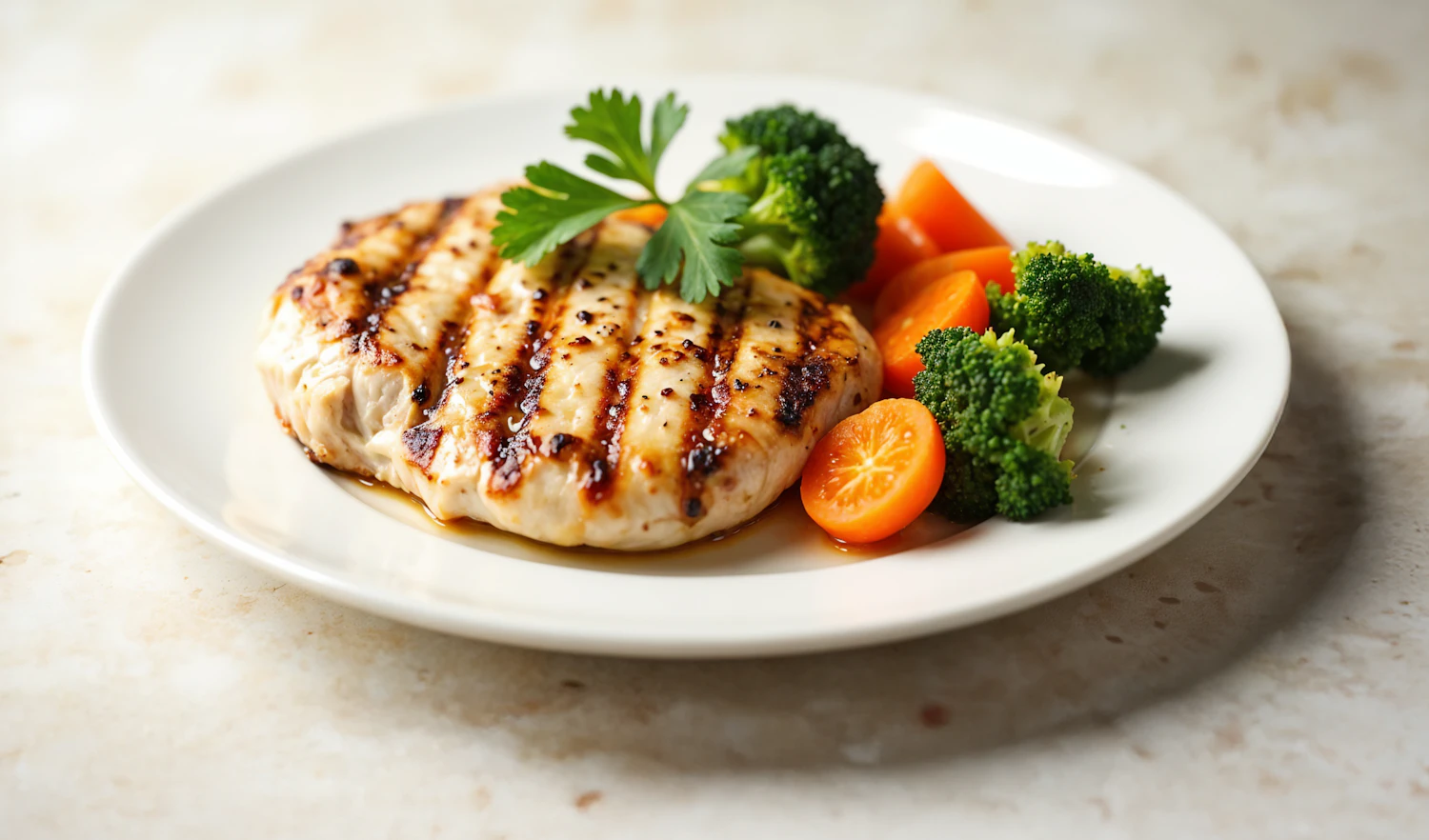
| Weeknight chicken dinner | Roasted broccoli and a side salad | Roast chicken thigh, skin removed | Brown rice or a baked sweet potato |
| Breakfast | A handful of berries and a sliced banana | Plain Greek yogurt or two eggs | Oatmeal or whole-grain toast |
| Packed lunch | Baby carrots, cherry tomatoes, an apple | Canned tuna or hummus | Whole-wheat pita or crackers |
| Taco night | Shredded lettuce, salsa, peppers, onion | Black beans or ground turkey | Corn tortillas |
| Pasta night | Zucchini, spinach and tomato in the sauce | White beans, shrimp or lean ground beef | Whole-wheat pasta, about a cup cooked |
| Soup and salad | Vegetable-heavy soup plus a green salad | Lentils in the soup, or cheese on the salad | A slice of whole-grain bread |
Notice that the protein and grain portions are smaller than most restaurant servings, and the vegetable portion is larger than most home servings. That gap is most of what the plate method fixes.
Why does the plate method work without counting calories?
It works because the foods you are being asked to eat more of are bulky and filling for the calories they carry, so the balance shifts on its own. You are not restricting anything; you are changing the ratio, and the ratio changes the total.
Three things are happening at once:
- Volume. Vegetables and fruit carry a lot of water and fiber, so they take up plate space and stomach space without contributing many calories.
- Fullness. Protein and fiber both tend to increase how satisfied you feel after a meal, which makes the gap until the next meal easier.
- Displacement. Every inch of plate given to vegetables is an inch not given to something more calorie-dense. You do not have to say no to anything; the geometry does it.
It is worth being honest about the limits. The plate method controls proportions, not portion size, and a very large plate of the right proportions is still a very large meal. It also says nothing about what you drink or what you eat standing at the counter afterward.
How do you use the plate method for bowls, wraps and mixed dishes?
You estimate the proportions in your head before the food is combined, because most real meals are not neatly divided. A stir-fry, a burrito bowl and a casserole can all follow the plate; you just apply the ratio to the ingredients rather than to the plate surface.
Some shortcuts that hold up well:
- For a stir-fry, aim for at least as much vegetable by volume as noodles or rice, and add the protein last so you can see how much went in.
- For sandwiches and wraps, the vegetable half usually has to sit next to the sandwich rather than inside it. Add a side salad or raw vegetables instead of chips.
- For soups, stews and chili, look at what is in the pot. If beans, lentils and vegetables outweigh the grain, you are close.
- For takeout, box up part of the grain and protein before you start and add a vegetable from home.
Where do fats, drinks and snacks fit?
Fats are part of the meal rather than a fifth section: the oil you cook in, the dressing on the salad, the nuts on the yogurt, the avocado in the taco. The Dietary Guidelines for Americans recommend replacing saturated fats with unsaturated ones where you can, so olive oil, canola oil, nuts, seeds and fish are the ones to lean on.
Drinks matter more than most people expect, because liquid calories do not fill you up the way food does. Water, plain coffee and tea, and unsweetened milk or fortified soy milk are the defaults; sugar-sweetened drinks are the single largest source of added sugars in the American diet, according to the CDC.
Snacks work best built like a small plate: something with fiber and something with protein. An apple with peanut butter, carrots with hummus, or yogurt with berries all follow the same shape as a meal, just smaller.
Do you still need to watch added sugar, sodium and saturated fat?
Yes, because the plate method does not see them. A plate can hit every proportion perfectly and still be high in sodium or saturated fat depending on how the food was cooked and what came out of a package. These are the limits the Dietary Guidelines for Americans and the FDA use.
| What to limit | The recommended limit | Which body sets it |
|---|---|---|
| Added sugars | Less than 10% of daily calories | Dietary Guidelines for Americans, 2020–2025 (USDA and HHS) |
| Saturated fat | Less than 10% of daily calories | Dietary Guidelines for Americans, 2020–2025 (USDA and HHS) |
| Sodium | Less than 2,300 mg a day for adults | Dietary Guidelines for Americans, 2020–2025 (USDA and HHS) |
| Fiber | 28 g a day is the Daily Value used on labels | FDA, Nutrition Facts label |
You do not need to calculate any of this daily. Use the Nutrition Facts label to compare two products when you are already standing in the aisle, and cook more of your food from base ingredients, which is where most of the sodium difference comes from.
How do you adapt the plate to your own goals and budget?
You change the size of the sections, not the structure. Someone doing heavy training needs more grain and protein than someone sitting at a desk, and an older adult trying to hold on to muscle may want protein at every meal rather than concentrated at dinner.
Some common adjustments:
- Eating on a budget: beans, lentils, eggs, canned fish, frozen vegetables, oats and brown rice cover most of the plate cheaply and store well.
- Vegetarian or vegan: the protein quarter comes from beans, lentils, tofu, tempeh, nuts and seeds, and pairing them with a vitamin C source improves iron absorption.
- Managing blood sugar: the same plate shape is the basis of the diabetes plate approach, with attention to the size of the grain and starch section.
- Trying to lose weight: keep the proportions and use a smaller plate rather than cutting out a section entirely.
Consistency over weeks matters far more than any single meal. A plate that is roughly right most days beats a perfect plate you keep for nine days and quit.
When should you talk to a doctor or dietitian?
Talk to your primary care provider or a registered dietitian if you have a condition that changes what a balanced plate should look like for you, or if food has started to feel stressful rather than useful.
Specific reasons to get individual advice include diabetes, chronic kidney disease, celiac disease, inflammatory bowel disease, food allergies, pregnancy, and being on a medication with dietary interactions such as warfarin. In these situations general guidance is a starting point, not an answer.
Reach out sooner if you are losing weight without trying, if you feel persistently tired despite eating enough, or if you find yourself thinking about food rules constantly, cutting out whole food groups, or feeling guilt after eating. Those are worth raising with a clinician; the Academy of Nutrition and Dietetics can help you find a registered dietitian nutritionist in your area. And if you are having thoughts of harming yourself, call or text 988 for the Suicide and Crisis Lifeline.
Common questions
- Can you lose weight without counting calories?
- Yes, many people can. Shifting the proportions of a meal toward vegetables, fruit and protein tends to lower the calorie total on its own, because those foods are filling for the calories they carry. It is less precise than tracking, but far easier to keep up, and consistency over months usually matters more than precision.
- What is the MyPlate method?
- MyPlate is the food guide published by the U.S. Department of Agriculture that turns the Dietary Guidelines for Americans into a picture of a plate. It recommends filling half your plate with fruits and vegetables, a quarter with protein foods, and a quarter with grains, with dairy or a fortified alternative on the side.
- How much of my plate should be protein?
- About a quarter of the plate, under the MyPlate model. For most meals that is a portion roughly the size of your palm, whether it is chicken, fish, tofu, eggs or beans. Active people, older adults and anyone building muscle may want a slightly larger share, spread across the day rather than piled into dinner.
- Does the plate method work for bowls, wraps and casseroles?
- Yes, you just apply the ratio to the ingredients instead of the plate. Aim for at least as much vegetable by volume as grain in a stir-fry or bowl. With sandwiches and wraps the vegetable half usually has to sit alongside as a salad or raw vegetables rather than fitting inside the bread.
- Do frozen and canned vegetables count on MyPlate?
- Yes. The USDA counts fresh, frozen, canned and dried forms toward the vegetable and fruit groups. Frozen vegetables are picked and frozen quickly and hold their nutrients well. Look for canned vegetables and beans labeled lower sodium or no salt added, and canned fruit packed in juice rather than heavy syrup.
- How big should my plate be?
- There is no official plate size, but a standard dinner plate of about nine to ten inches keeps portions reasonable for most adults. Larger modern plates make it easy to serve more of everything while still hitting the right ratios. If you are managing your weight, keep the proportions and shrink the plate rather than dropping a section.
- Where do fats fit on the plate?
- Fats are built into the meal rather than given their own section: cooking oil, salad dressing, nuts, seeds and avocado. The Dietary Guidelines for Americans recommend replacing saturated fats with unsaturated fats where you can, which in practice means leaning on olive and canola oil, nuts, seeds and fish rather than butter.
Sources
Published research and guidance this page draws on. Check the original where a detail matters to you.
- 1MyPlate: the USDA food guide based on the Dietary GuidelinesU.S. Department of Agriculture
- 2Dietary Guidelines for Americans, 2020-2025U.S. Departments of Agriculture and Health and Human Services
- 3Food Labeling and Nutrition: the Nutrition Facts labelU.S. Food and Drug Administration
- 4Nutrition: healthy eating for adultsCenters for Disease Control and Prevention
- 5Healthy Eating and Physical Activity for LifeNational Institute of Diabetes and Digestive and Kidney Diseases (NIH)
- 6Healthy Eating: the American Heart Association guidanceAmerican Heart Association
- 7Find a registered dietitian nutritionistAcademy of Nutrition and Dietetics
- 8Nutrition: MedlinePlus health topicMedlinePlus, U.S. National Library of Medicine
This article is for general education and is not a substitute for professional medical advice. Speak with a qualified healthcare provider about your individual circumstances.
About HealthPathCore
An independent health knowledge library
Every article here is built from published research and guidance issued by named health bodies, written in plain language, and dated so you can see how current it is. When the evidence moves, we come back and correct the piece.
How we research and write