The Dukan Diet: The 4 Phases Explained
Attack, Cruise, Consolidation, Stabilization: how each Dukan phase works, what the protein-only days and oat bran rule involve, and the nutrient gaps the plan leaves.
The short answer
The Dukan Diet runs four phases: Attack, a few days of lean protein only; Cruise, alternating protein-only and protein-plus-vegetable days until goal weight; Consolidation, adding fruit, bread, and cheese back; and Stabilization, keeping one protein-only day weekly for life. Oat bran is required daily throughout. No US health authority endorses it.
Key takeaways
- The Dukan Diet moves through four fixed phases, Attack, Cruise, Consolidation, and Stabilization, each with its own food rules and daily oat bran amount.
- The Attack phase allows lean protein foods and oat bran only, with no vegetables, fruit, grains, legumes, nuts, or added fat.
- Cruise alternates protein-only days with protein-plus-vegetable days and continues until you reach a goal weight, which can mean months.
- All the plan's figures, including the oat bran amounts and the five-days-per-pound consolidation rule, are the commercial plan's own rules rather than health agency guidance.
- The rapid first-week drop on the scale is largely water released as glycogen empties, not fat.
- There is no large independent long-term randomized trial of the Dukan Diet, and evidence on high-protein diets in general shows the advantage over other approaches tends to shrink by one year.
- The plan is low in fiber, vitamin C, potassium, folate, and unsaturated fat during the first two phases, and can push sodium past the 2,300 mg daily limit.
- Dukan is not appropriate during pregnancy or breastfeeding, with kidney disease, gout, diabetes on insulin or sulfonylureas, or a history of disordered eating.
The Dukan Diet is a four-phase, high-protein, low-carbohydrate plan created by French physician Pierre Dukan. Instead of counting calories, you follow a fixed sequence of phases with a list of permitted foods, a daily oat bran requirement, and days on which you eat protein foods and almost nothing else.
It is among the more restrictive and less nutritionally complete of the popular commercial diets, and no US health authority endorses it. This page explains the four phases in detail, what a day actually looks like, and the specific gaps the plan leaves.
What are the four phases of the Dukan Diet?
Attack, Cruise, Consolidation, and Stabilization. Each has its own food rules, its own length, and its own daily oat bran amount. The sequence is the whole design of the plan, so the phases only make sense in order.
| Phase | Typical length | What you eat | Daily oat bran (plan's rule) |
|---|---|---|---|
| 1. Attack | About 2 to 7 days | Lean protein foods only. No vegetables, no fruit, no added fat | About 1.5 tablespoons |
| 2. Cruise | Until you reach your goal weight | Alternating protein-only days and protein-plus-vegetable days | About 2 tablespoons |
| 3. Consolidation | Set by how much you lost; the plan's rule is five days for every pound | Adds back fruit, bread, cheese, and two weekly starch servings, plus two "celebration" meals a week | About 2.5 tablespoons |
| 4. Stabilization | Intended to be permanent | Most foods allowed, but one protein-only day every week, forever | About 3 tablespoons |
The plan also asks for daily walking, starting at about 20 minutes in Attack and rising to around 30 minutes in later phases. All of these figures are the commercial plan's own published rules, not recommendations from a US health agency.
What can you eat in the Attack phase?
Lean protein foods and nothing else, for two to seven days. The plan publishes a list of permitted high-protein foods, and in Attack that list is the entire diet.
- Lean meat: beef, veal, and pork tenderloin, trimmed of fat. No lamb, no duck, no fatty cuts.
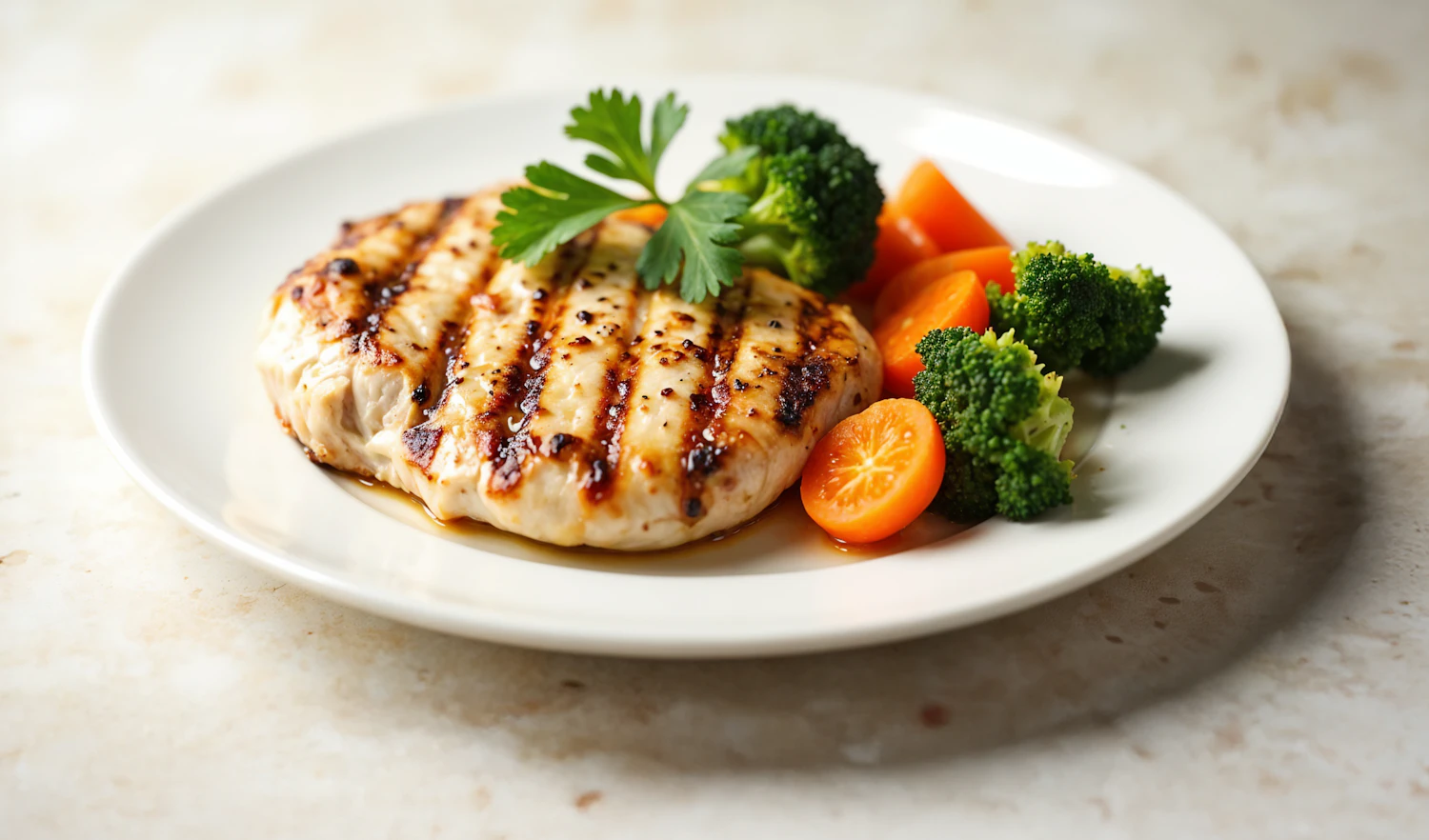
- Poultry: chicken and turkey, skin removed.
- Fish and shellfish: all types, including salmon, cod, tuna, shrimp, and crab.
- Eggs: whites without limit, yolks limited in most versions.
- Nonfat dairy: plain nonfat yogurt, nonfat cottage cheese, skim milk.
- Plant protein: tofu, tempeh, and seitan in the vegetarian version.
- Plus: the oat bran, at least 6 cups of water a day, and small amounts of vinegar, mustard, herbs, spices, and lemon for flavor.
What is missing is the point. Attack contains no vegetables, no fruit, no whole grains, no legumes, no nuts, and no added fat. That means essentially no fiber apart from the oat bran, and very little vitamin C, potassium, or magnesium. This is why the phase is deliberately kept to a week or less.
How do protein-only days work in the Cruise phase?
Cruise alternates two kinds of day: a pure protein day, which is the Attack menu again, and a protein-plus-vegetable day, which adds non-starchy vegetables to the same protein base. Common patterns are one day on, one day off, or five days of each in a block.
On vegetable days you can eat spinach, broccoli, cauliflower, zucchini, peppers, green beans, mushrooms, tomatoes, cucumber, asparagus, and salad greens. Starchy vegetables stay off the list throughout: no potatoes, corn, peas, beans, lentils, or chickpeas at any point in Cruise.
You stay in Cruise until you hit a goal weight, which for some people means months of alternating days. That is a long stretch on a pattern in which every other day contains no plant food at all.
Why does the plan require oat bran?
Oat bran is the plan's one deliberate source of fiber, and it is the only carbohydrate food permitted in every phase. Oat bran contains soluble fiber, including beta-glucan, which absorbs water, adds bulk, and slows digestion, so the intent is to blunt hunger and help with the constipation the rest of the plan causes.
A few tablespoons of oat bran is a genuine fiber contribution, but it does not replace the fiber in vegetables, fruit, legumes, and whole grains that the early phases remove. Most Americans already fall well short of recommended fiber intake, and Attack and Cruise make that worse rather than better.
What does a day on the Dukan Diet look like?
| Meal | Protein-only day | Protein-plus-vegetable day |
|---|---|---|
| Breakfast | Scrambled egg whites, plain nonfat yogurt, oat bran stirred into it, black coffee | Omelet with mushrooms and spinach, oat bran pancake, black coffee |
| Lunch | Grilled chicken breast, nonfat cottage cheese, water | Grilled chicken over a large salad with vinegar and mustard dressing |
| Dinner | Baked cod with lemon, plain nonfat yogurt | Baked cod with steamed green beans and zucchini |
| Snack | Slice of turkey breast or a nonfat yogurt | Celery and cucumber sticks, nonfat yogurt |
| Fluids | At least 6 cups of water | At least 6 cups of water |
Read a protein-only day back and the problem is obvious. There is no plant food on the plate other than the oat bran, no fat you did not get from the protein itself, and very little variety.
Why do people lose weight on the Dukan Diet?
For unremarkable reasons, once you set the branding aside. Protein is more satiating per gram than carbohydrate or fat, so appetite tends to drop. And cutting out entire categories of food, which the plan does aggressively, reduces total calorie intake almost automatically even without counting.
The fast drop in the first week is largely water. Cutting carbohydrate empties glycogen, the body's short-term carbohydrate store, and glycogen holds water with it. That reverses when carbohydrate returns. It is motivating, and it is not fat.
There is no large, independent, long-term randomized trial of the Dukan Diet specifically. What we have is general evidence on high-protein, low-carbohydrate patterns, which shows meaningful weight change over three to six months, similar to other calorie-reducing approaches, with the advantage tending to shrink by the one-year mark. The consistent finding across diet research is that adherence matters more than the specific pattern. We will not quantify what you might lose, and neither should anyone else.
What happens in Consolidation and Stabilization?
Consolidation reintroduces food gradually and is explicitly a transition, not a destination. It adds back one serving of fruit a day, two slices of whole-grain bread, a portion of hard cheese, two starch servings a week, and two so-called celebration meals a week where you eat what you want.
Its length is set by arithmetic rather than by how you feel. The plan’s published rule is five days of Consolidation for every pound lost in the earlier phases, so a larger loss means a longer transition. One protein-only day each week continues throughout.
Stabilization is meant to last for the rest of your life. Most foods are allowed again, but three rules stay permanent: about 3 tablespoons of oat bran daily, roughly 20 to 30 minutes of walking, and one full protein-only day every week, which the plan traditionally puts on Thursday.
That permanent weekly protein-only day is worth thinking about before you start. It is the plan’s answer to weight regain, and it asks you to spend one day in every seven eating no vegetables, fruit, grains, or fat, indefinitely. Whether that is something you can live with for years is a fair question to settle up front.
How nutritionally complete is it?
Not very, especially in the first two phases. This is the plan's clearest weakness and it is worth being specific about.
- Fiber. Attack contains almost none beyond the oat bran, and protein-only Cruise days repeat that indefinitely. Constipation is a predictable, frequently reported effect.
- Vitamin C, potassium, folate, and magnesium. These come largely from fruit, vegetables, and legumes, all of which are absent or limited early on.
- Healthy fats. Attack bans added fat, so olive oil, nuts, seeds, and avocado are out. The Dietary Guidelines for Americans recommend replacing saturated fat with unsaturated fat, which the phase makes impossible.
- Sodium. Building meals from deli meat, canned fish, and processed lean protein pushes sodium well past the 2,300 mg daily limit the Dietary Guidelines set for adults.
- Cost and effort. Lean protein is one of the more expensive parts of a grocery cart, and a plan built almost entirely from it is not cheap.
Dukan is also socially difficult. A protein-only day is nearly impossible to observe at a restaurant, a family dinner, or a work event, and the Stabilization phase asks you to keep one such day every week permanently.
Who should not try the Dukan Diet?
Talk to your doctor or a registered dietitian before starting, and do not attempt this plan on your own if any of the following apply.
| Group | Why it matters |
|---|---|
| Pregnant or breastfeeding | Folate, fiber, and carbohydrate needs are higher and the early phases cannot meet them |
| Type 1 diabetes, or type 2 on insulin or sulfonylureas | Removing carbohydrate without a dose review can cause severe hypoglycemia |
| Kidney disease or reduced kidney function | A sustained very high protein load adds to the kidneys' work and usually needs to be managed |
| Liver disease | Protein and nutrient needs are condition-specific and should be set by your care team |
| Gout | High protein intake and rapid weight loss can raise uric acid and trigger an attack |
| History of disordered eating | Rigid phase rules and permitted-food lists can entrench restrictive patterns |
| Under 18 | Growth and development require varied, consistent intake |
| On medication needing adjustment when eating changes | Diabetes drugs, diuretics, blood pressure medication, and warfarin are all affected |
If food rules already occupy a lot of your thinking, this plan's structure is likely to make that worse. The National Eating Disorders Association offers free screening and support at nationaleatingdisorders.org.
When should you see a doctor?
Before you start, if you take any prescription medication or have a chronic condition, and particularly if you have any history of kidney problems or gout. NIDDK's guidance on choosing a safe and successful weight-loss program is a good filter for a plan this restrictive.
If the structure is what appeals to you, a dietitian can build something similar without the extremes: protein at every meal, plenty of vegetables, and a modest portion of whole grains or legumes. The Academy of Nutrition and Dietetics has a find a nutrition expert directory.
Seek care for a gout flare, flank pain that could be a kidney stone, constipation that does not resolve, fainting, or repeated shakiness and sweating that improve when you eat. Call 911 for chest pain, confusion, or if someone becomes unresponsive.
Common questions
- What are the four phases of the Dukan Diet?
- Attack lasts about two to seven days and permits lean protein foods only. Cruise alternates protein-only days with protein-plus-vegetable days until you reach your goal weight. Consolidation adds fruit, bread, cheese, and limited starches back, sized to how much you lost. Stabilization is meant to be permanent, with one protein-only day every week.
- What can you eat on the Dukan Attack phase?
- Lean beef, veal, and pork tenderloin, skinless chicken and turkey, all fish and shellfish, eggs, nonfat dairy such as plain yogurt and cottage cheese, and tofu or tempeh in the vegetarian version, plus about 1.5 tablespoons of oat bran daily. No vegetables, fruit, grains, legumes, nuts, or added fat are permitted.
- Why does the Dukan Diet require oat bran?
- Oat bran is the plan's only permitted carbohydrate food and its deliberate fiber source. Its soluble fiber absorbs water, adds bulk, and slows digestion, which is meant to reduce hunger and ease the constipation the rest of the plan causes. A few tablespoons helps, but it does not replace the fiber removed with vegetables, fruit, and legumes.
- How long do you stay on the Cruise phase?
- Until you reach your target weight, which the plan does not cap. For some people that means several months of alternating protein-only and protein-plus-vegetable days. That is a long stretch in which every other day contains no plant food beyond the oat bran, which is why fiber and micronutrient gaps become a real concern.
- Is the Dukan Diet safe for your kidneys?
- For people with healthy kidneys, high protein intake is not established as harmful, but the evidence on very high intakes sustained for months is limited. For anyone with kidney disease or reduced kidney function, a sustained very high protein load adds to the kidneys' work and should be managed by a clinician. Get medical advice first.
- Does the Dukan Diet work?
- There is no large independent long-term randomized trial of the Dukan Diet specifically. Research on high-protein, low-carbohydrate patterns in general shows meaningful change over three to six months, comparable to other calorie-reducing approaches, with the advantage shrinking by one year. Adherence matters more than the pattern, and this plan is hard to sustain.
- Can you eat vegetables on the Dukan Diet?
- Not in the Attack phase, and only on alternating days during Cruise. On vegetable days you can have non-starchy options such as spinach, broccoli, cauliflower, zucchini, peppers, green beans, mushrooms, tomatoes, and salad greens. Starchy vegetables and legumes, including potatoes, corn, peas, beans, and lentils, stay excluded throughout Cruise.
- Why am I constipated on the Dukan Diet?
- Because the plan removes nearly all fiber apart from the oat bran during Attack and on protein-only Cruise days. Fiber adds bulk and holds water in stool, and most Americans already fall short of recommended intakes. If constipation lasts more than a couple of weeks, or comes with pain or bleeding, see your doctor.
Sources
Published research and guidance this page draws on. Check the original where a detail matters to you.
- 1Choosing a Safe and Successful Weight-Loss ProgramNational Institute of Diabetes and Digestive and Kidney Diseases
- 2ConstipationNational Institute of Diabetes and Digestive and Kidney Diseases
- 3Eating Right for Chronic Kidney DiseaseNational Institute of Diabetes and Digestive and Kidney Diseases
- 4Dietary Guidelines for Americans, 2020-2025US Departments of Agriculture and Health and Human Services
- 5Protein in DietMedlinePlus, National Library of Medicine
- 6FiberMedlinePlus, National Library of Medicine
- 7GoutMedlinePlus, National Library of Medicine
- 8Fad DietsAcademy of Nutrition and Dietetics
- 9Protein FoodsAcademy of Nutrition and Dietetics
- 10Eating Disorders: Screening, Helpline, and SupportNational Eating Disorders Association
This article is for general education and is not a substitute for professional medical advice. Speak with a qualified healthcare provider about your individual circumstances.
About HealthPathCore
An independent health knowledge library
Every article here is built from published research and guidance issued by named health bodies, written in plain language, and dated so you can see how current it is. When the evidence moves, we come back and correct the piece.
How we research and write