The 21-Day Juice Diet: What You Need to Know
Juice cleanses do not detox anything, and three weeks on a liquid diet carries real risks. Here is what juicing removes, who should avoid it, and safer alternatives.
The short answer
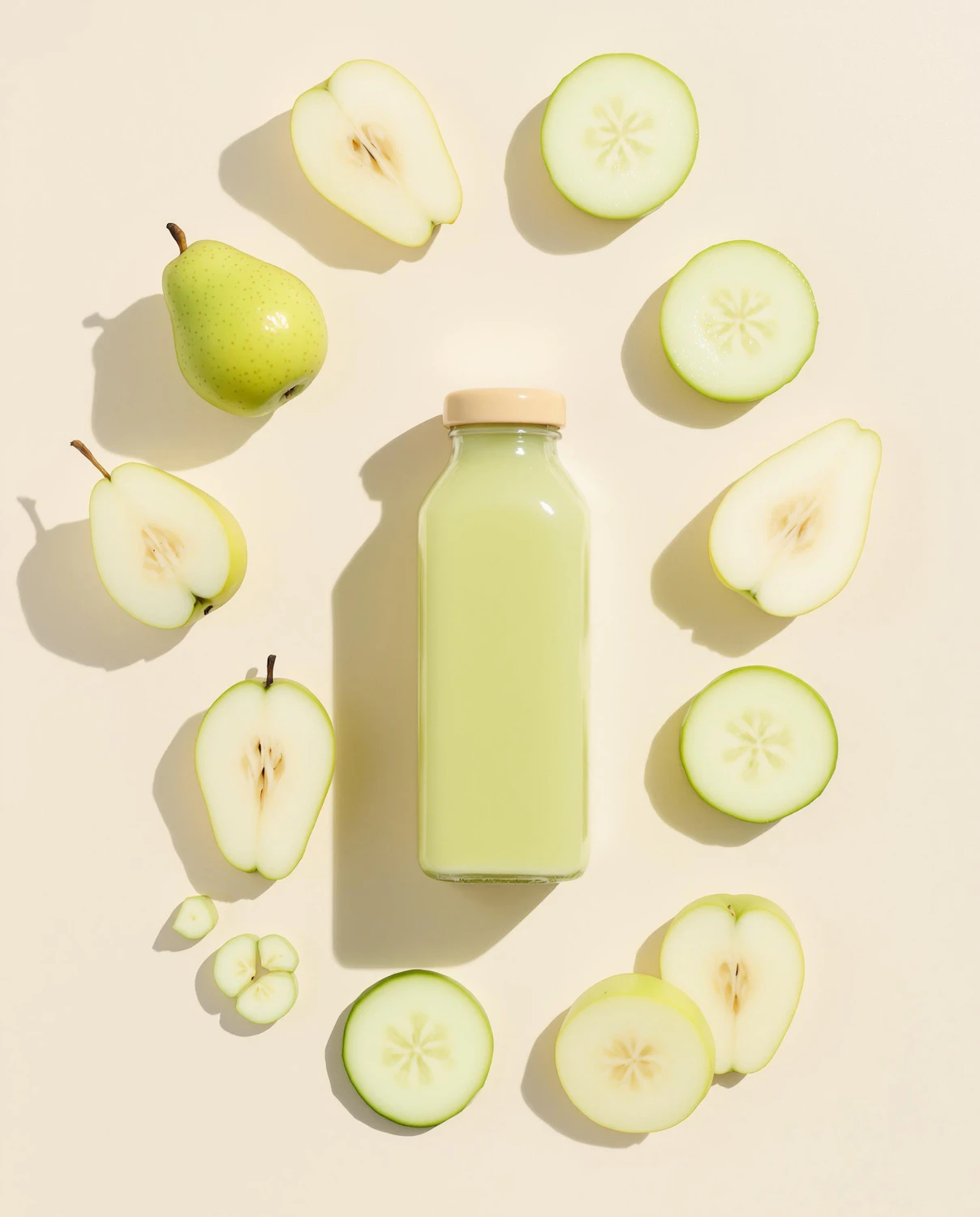
A 21-day juice diet replaces meals with fruit and vegetable juice for three weeks. Detox and cleanse claims are not supported, since the liver and kidneys handle that continuously. Juicing removes most fiber, and three weeks of low protein and low calorie intake warrants medical supervision rather than self-direction.
Key takeaways
- Detox and cleanse claims are not supported by evidence; the liver, kidneys, lungs, skin, and gut perform that function continuously without any special diet.
- Juicing discards most of the fiber in fruit and vegetables, which is what would otherwise slow sugar absorption, add bulk, and help you feel full.
- Blending keeps the fiber that juicing removes, so a smoothie is a straightforwardly better choice than a juice.
- Three weeks of juice-only intake means very low protein alongside a calorie deficit, which draws on lean tissue including muscle.
- High-oxalate juices from spinach, beets, and chard can raise kidney stone risk, and concentrated potassium is dangerous for people whose kidneys are not clearing it normally.
- Grapefruit juice interacts with many prescription drugs, and large volumes of leafy green juice can change vitamin K intake enough to affect warfarin.
- The FDA advises that people who are pregnant, older adults, young children, and anyone immunocompromised avoid unpasteurized juice.
- No US health authority endorses juice cleanses, and any extended liquid-only plan should be medically supervised rather than self-directed.
A 21-day juice diet replaces some or all meals with fruit and vegetable juice for three weeks. It is usually marketed as a detox or cleanse, and both of those claims are unsupported: your liver and kidneys already do that job continuously and do not need a special diet to do it.
Three weeks is a long time on a liquid diet. That is the real issue with this plan, more than any single ingredient, and it is why an extended juice-only program warrants medical supervision rather than a bookmarked blog post. Here is what the plan involves, what the evidence supports, and what to watch for.
What does a 21-day juice diet involve?
Versions vary widely because there is no standard protocol. Most replace all or nearly all meals with fresh-pressed or blended fruit and vegetable juices for the full 21 days, sometimes phasing in small amounts of solid food toward the end.
A typical day is four to six juices, often built around apple, carrot, beet, celery, cucumber, kale, spinach, lemon, and ginger. Some plans add supplements, herbal teas, or laxative preparations. Some prescribe a "preparation" week and a "reintroduction" week on either side.
Total daily calories are usually low, often well under what an adult needs, and protein intake is very low regardless of calorie level. Those two facts drive nearly every risk on this page.
Does juicing detox your body?
No. Detoxification is something your body does continuously. The liver chemically modifies substances so they can be excreted, the kidneys filter blood and pass waste into urine, and the lungs, skin, and digestive tract contribute as well. None of these organs waits for a juice cleanse to start working.
The National Center for Complementary and Integrative Health, part of the NIH, reviewed detoxes and cleanses and found no convincing evidence that they remove toxins or improve health. Marketing materials for these programs typically do not name the toxins they claim to remove, because there is nothing specific to name.
The FDA has also acted against detox and cleanse products making unproven disease claims. If a program tells you it clears toxins, resets your gut, or purifies your blood, treat that as a marketing statement, not a health claim you can rely on.
Some people do feel better on these programs. That is generally explained by drinking more fluid, eating more produce than usual, and cutting alcohol and ultra-processed food, all of which you can do without a three-week liquid diet.
What does juicing remove from the food?
Fiber, mostly. Juicing separates liquid from pulp, which discards most of the insoluble fiber in the fruit or vegetable. That single change alters how the drink behaves in your body.
| Whole fruit or vegetable | Juice | Blended smoothie | |
|---|---|---|---|
| Fiber | Intact | Mostly removed | Largely retained |
| Effect on blood sugar | Slower rise, blunted by fiber | Faster rise, concentrated sugars | Intermediate |
| Fullness | Highest | Lowest | Moderate |
| Portion effect | Hard to overeat | Easy to drink several servings at once | Moderate |
| Protein and fat | Varies by food | Essentially none | Essentially none unless added |
Fiber does real work: it slows sugar absorption, adds bulk, feeds gut bacteria, and helps you feel full. Most Americans already fall well short of recommended fiber intake, and a juice diet takes them further from it, not closer. If you want the produce without the downside, blend instead of juice.
Why is 21 days specifically a concern?
Because the problems with a juice-only diet compound over time. A single day of juice alongside food is a minor dietary choice. Three weeks as your sole food source is a very low calorie, very low protein diet, and that is a different category of thing.
What are the specific risks?
- Inadequate protein. Juice contains almost none. Over three weeks, a very low protein intake alongside a calorie deficit means the body draws on lean tissue, including muscle. Losing muscle is not the outcome most people are after.
- Blood sugar swings. Juice delivers concentrated sugars without the fiber that would slow absorption, producing rises and subsequent dips that show up as shakiness, irritability, and hunger.
- Fatigue and cognitive effects. Low calorie and low protein intake sustained for weeks commonly causes tiredness, dizziness, poor concentration, headache, and feeling cold.
- Oxalate load and kidney risk. Spinach, beets, rhubarb, and Swiss chard are high in oxalate. Consumed in large juiced quantities day after day, they can raise the risk of kidney stones, and there are documented cases of acute kidney injury following extreme juice cleanses. This is the most serious specific hazard on the list.
- Potassium. Vegetable juices concentrate potassium, which matters a great deal if your kidneys are not clearing it normally.
- Micronutrient gaps. Juice supplies little calcium, iron, vitamin B12, vitamin D, or zinc, and essentially no essential fatty acids.
- Gut effects. Low fiber plus liquid-only intake commonly causes constipation or diarrhea, and any plan involving laxatives adds electrolyte disturbance to that.
- Food safety. Unpasteurized juice can carry harmful bacteria. The FDA warns that people who are pregnant, older adults, young children, and anyone with a weakened immune system should avoid unpasteurized juice entirely.
Extended very low calorie diets are used clinically in some situations, but when they are, they are medically supervised with blood monitoring and formulated to supply complete protein and micronutrients. A juice program is neither supervised nor formulated.
Will you lose weight on a juice diet?
People generally see the scale drop, but what it means is not what it looks like. A large share of early change is water and the weight of food in your digestive tract, not fat, and it reverses when you eat normally again.
We will not give you a number, and you should not trust a source that does. The consistent finding across diet research is that adherence matters more than the specific pattern, and a program with a hard 21-day end date and no maintenance stage has no adherence mechanism at all.
No US health authority endorses juice cleanses, and this is not an endorsed weight-management approach. NIDDK's guidance on choosing a safe and successful weight-loss program describes what a credible program looks like, and a three-week juice-only plan meets almost none of those criteria.
Who should not do a juice diet?
For some of these groups, an extended juice diet is not merely unwise but genuinely unsafe. Talk to your doctor or a registered dietitian before starting anything like this.
| Group | Why it matters |
|---|---|
| Pregnant or breastfeeding | Calorie, protein, iron, and folate needs are higher, and unpasteurized juice carries an infection risk |
| Type 1 diabetes, or type 2 on insulin or sulfonylureas | Concentrated sugar with no protein or fat causes swings that are hard to dose against; severe hypoglycemia is a real risk |
| Kidney disease | Oxalate and potassium loads from vegetable juice can be dangerous when kidney clearance is impaired |
| History of kidney stones | High-oxalate juices raise stone risk |
| Liver disease | Protein and nutrient needs are condition-specific and must be set by your care team |
| Gout | Rapid weight loss and fasting-like intake can raise uric acid and trigger an attack |
| History of disordered eating | Cleanse framing and liquid-only rules are a well-recognized trigger |
| Under 18 | Growth and development require adequate protein and calories |
| Weakened immune system, older adults, young children | Should avoid unpasteurized juice entirely, per FDA guidance |
| On medication needing adjustment when eating changes | Grapefruit interacts with many drugs; leafy green juice affects warfarin through vitamin K; diuretics and blood pressure drugs are affected by fluid and potassium shifts |
| Physically demanding job or training schedule | Three weeks of low calorie and low protein intake impairs performance and recovery |
The warfarin and grapefruit interactions deserve emphasis because they are easy to miss. Large daily volumes of kale or spinach juice can meaningfully change vitamin K intake, and grapefruit juice affects the metabolism of a long list of common prescriptions. Check with your pharmacist.
If a cleanse feels like a way to regain control after eating you regret, that pattern is worth taking seriously rather than acting on. The National Eating Disorders Association offers free confidential screening and support at nationaleatingdisorders.org.
What is a safer way to get the benefits?
Keep the produce, drop the restriction. If what appeals to you is eating more fruit and vegetables and less ultra-processed food, you can have that without three weeks of liquid.
- Blend rather than juice. A smoothie keeps the fiber, so it fills you up and moderates the blood sugar rise.
- Add a juice or smoothie to meals rather than replacing them, and pair it with a protein source.
- Vary the produce instead of drinking a gallon of one vegetable, which also limits oxalate and potassium load.
- Choose pasteurized juice if you are pregnant, older, immunocompromised, or buying for a young child.
- Aim at the pattern, not the event. The Dietary Guidelines for Americans recommend filling half your plate with fruits and vegetables at meals, which is the same goal without the risk.
When should you see a doctor?
Before you start, if you are considering anything longer than a day or two, and always if you take prescription medication or have a chronic condition. If you are set on an extended liquid-only plan, do it under medical supervision with blood work, not on your own.
Stop and seek care if you develop severe fatigue, fainting, confusion, a racing or irregular heartbeat, muscle weakness or cramping that could indicate an electrolyte problem, flank or back pain that could be a kidney stone, a marked drop in how much you are urinating, or persistent vomiting or diarrhea.
Call 911 for chest pain, seizure, severe difficulty breathing, or if someone becomes confused or unresponsive. A registered dietitian is the right person for the underlying goal; the Academy of Nutrition and Dietetics has a find a nutrition expert directory.
Common questions
- Do juice cleanses actually detox your body?
- No. Your liver chemically modifies substances for excretion and your kidneys filter them out of the blood, continuously and without needing a special diet. The NIH's National Center for Complementary and Integrative Health found no convincing evidence that detoxes or cleanses remove toxins or improve health. Programs making these claims rarely name any specific toxin.
- Is a 21-day juice diet safe?
- Not as a self-directed plan. Three weeks of juice-only intake means very low protein, low calories, and almost no fiber, which can cause fatigue, dizziness, muscle loss, and blood sugar swings. For people with kidney disease, diabetes on medication, or during pregnancy it can be genuinely dangerous. Any extended liquid diet needs medical supervision.
- Is juicing better than blending?
- No, blending is generally better. Juicing separates the liquid from the pulp and discards most of the fiber, while blending keeps it. Fiber slows sugar absorption, adds bulk, feeds gut bacteria, and helps you feel full. Most Americans already fall short of recommended fiber intake, so keeping it in is the more useful choice.
- Can you get enough protein on a juice diet?
- No. Fruit and vegetable juices contain essentially no protein. Over a few days that matters little, but over three weeks a very low protein intake combined with a calorie deficit means your body draws on lean tissue, including muscle. Adding a protein source alongside juice is a straightforward fix, but it ends the juice-only plan.
- Why do I feel dizzy or foggy on a juice cleanse?
- Usually a combination of too few calories, almost no protein or fat, and blood sugar swings from concentrated juice sugars without fiber to slow absorption. Headache, tiredness, poor concentration, irritability, and feeling cold are all common. If you experience fainting, confusion, or a racing heartbeat, stop and get medical care.
- Are juice diets bad for your kidneys?
- They can be. Spinach, beets, rhubarb, and chard are high in oxalate, and drinking large juiced quantities daily can raise kidney stone risk; acute kidney injury has been documented after extreme cleanses. Vegetable juice is also concentrated in potassium, which is hazardous if your kidneys are not clearing it normally. Avoid this if you have kidney disease.
- Can you juice cleanse while taking medication?
- Check with your pharmacist first. Grapefruit juice affects the metabolism of many common prescriptions. Large volumes of kale or spinach juice change vitamin K intake enough to interfere with warfarin. Diuretics and blood pressure drugs are affected by fluid and potassium shifts, and diabetes medication doses can become unsafe when carbohydrate intake changes this much.
- What is a healthier alternative to a juice cleanse?
- Add produce rather than removing food. Blend instead of juicing so the fiber stays in, pair a smoothie with a protein source, and add it to meals rather than replacing them. The Dietary Guidelines for Americans recommend filling half your plate with fruits and vegetables, which achieves the same goal without the risks.
Sources
Published research and guidance this page draws on. Check the original where a detail matters to you.
- 1Detoxes and Cleanses: What You Need To KnowNational Center for Complementary and Integrative Health, NIH
- 2Choosing a Safe and Successful Weight-Loss ProgramNational Institute of Diabetes and Digestive and Kidney Diseases
- 3Eating Right for Chronic Kidney DiseaseNational Institute of Diabetes and Digestive and Kidney Diseases
- 4Low Blood Glucose (Hypoglycemia)National Institute of Diabetes and Digestive and Kidney Diseases
- 5Dietary Guidelines for Americans, 2020-2025US Departments of Agriculture and Health and Human Services
- 6FiberMedlinePlus, National Library of Medicine
- 7Diet for Rapid Weight LossMedlinePlus, National Library of Medicine
- 8PotassiumMedlinePlus, National Library of Medicine
- 9Fad DietsAcademy of Nutrition and Dietetics
- 10Eating Disorders: Screening, Helpline, and SupportNational Eating Disorders Association
This article is for general education and is not a substitute for professional medical advice. Speak with a qualified healthcare provider about your individual circumstances.
About HealthPathCore
An independent health knowledge library
Every article here is built from published research and guidance issued by named health bodies, written in plain language, and dated so you can see how current it is. When the evidence moves, we come back and correct the piece.
How we research and write