Foods Worth Eating Less Often, and Why
Ten common foods worth having less frequently, framed around what the Dietary Guidelines for Americans actually limit, with a practical swap for each one.

The short answer
The foods worth eating less often are the ones that use up the Dietary Guidelines limits fastest: sugar-sweetened drinks, candy and pastries, processed meats, fried fast food, salty snacks, and boxed or restaurant meals. No food is forbidden. Frequency and portion size are the levers that actually change your overall pattern.
Key takeaways
- The Dietary Guidelines for Americans limit four things rather than banning foods: added sugars under 10% of calories, saturated fat under 10%, sodium under 2,300 mg a day, and alcohol to no more than two drinks daily for men or one for women.
- Sugar-sweetened drinks are usually the single largest source of added sugars, which makes them the highest-yield place to start.
- Processed meats are classified by the World Health Organization’s cancer agency as a Group 1 carcinogen for colorectal cancer, though the added risk from an occasional serving is small.
- Bread, pizza, sandwiches, soup, and restaurant meals contribute more sodium for most Americans than the salt shaker does.
- Your health tracks the pattern of eating over months, so halving how often you eat something works better than trying to eliminate it.
- Adding fiber-rich foods displaces other foods on its own; the Nutrition Facts Daily Value for fiber is 28 grams and most Americans fall short.
- Ask for a registered dietitian nutritionist (RD or RDN), since "nutritionist" alone is not a consistently regulated title in the United States.
- Anxiety or guilt around ordinary meals, a shrinking list of acceptable foods, or skipping meals to compensate are reasons to seek support rather than to restrict further.
Lists of "foods to never eat" are easy to write and almost impossible to follow. They also get the problem backwards. Nothing on this page is forbidden, and no single food determines whether your diet is healthy.
What actually moves the needle is frequency and portion. The Dietary Guidelines for Americans do not ban anything; they set limits on four things, added sugars, saturated fat, sodium, and alcohol, and the foods below are simply the ones that use up those limits fastest.
Which foods are worth eating less often?
The foods worth having less frequently are the ones that deliver most of the added sugars, saturated fat, and sodium in the American diet: sugar-sweetened drinks, candy and pastries, processed meats, fried fast food, salty packaged snacks, and boxed or restaurant meals built on refined starch and salt.
That is not a moral ranking. It is arithmetic. These foods are concentrated sources of the few components the Dietary Guidelines actually cap, so they are where cutting back buys you the most room.
What do the Dietary Guidelines actually limit?
Four things, and they are all quantitative limits rather than prohibitions. Everything else in the Guidelines is about what to eat more of: vegetables, fruit, whole grains, beans, seafood, nuts, and low-fat dairy.
| Component | The limit | Why it is capped | Where most of it comes from |
|---|---|---|---|
| Added sugars | Less than 10% of daily calories | They add calories without nutrients, crowding out foods that carry them | Sugar-sweetened drinks, candy, cookies, cakes, sweetened cereals and yogurts |
| Saturated fat | Less than 10% of daily calories | Raises LDL cholesterol, a driver of cardiovascular disease | Fatty and processed meats, fried food, butter, cheese, baked goods |
| Sodium | Less than 2,300 mg per day | Higher intakes are linked with higher blood pressure | Bread, pizza, sandwiches, soup, deli meat, snacks, restaurant meals |
| Alcohol | If you drink: no more than 2 drinks a day for men, 1 for women | Risk rises with amount; the Guidelines note that less is better for health | Beer, wine, spirits, and mixed drinks, including large single servings |
Two numbers pull in the opposite direction and are worth holding alongside these. The Daily Value for dietary fiber on the Nutrition Facts label is 28 grams, and most Americans fall well short of it. The protein RDA for adults is 0.8 grams per kilogram of body weight. Adding fiber-rich foods often displaces the foods below without any conscious restriction at all.
Which foods use up those limits fastest?
Here are ten common foods, why each is worth having less often, and something that does a similar job. The "instead" column is not a punishment swap; it is a food that scratches the same itch with more room left in the budget.
| Food | Why less often | What to have instead |
|---|---|---|
| Regular soda and energy drinks | A leading source of added sugars, and liquid calories do less to satisfy hunger than food | Sparkling water, unsweetened iced tea, water with citrus, or a smaller serving of the real thing |
| Large sweetened coffee drinks | Can carry a dessert's worth of added sugar before you count the pastry | Coffee with milk, a smaller size, or half the flavored syrup |
| Candy, cookies, and pastries | Added sugars plus saturated fat, and easy to eat past the point of enjoying it | Fruit with yogurt or nut butter; a planned portion of the real dessert rather than a running supply |
| Sweetened breakfast cereals | Front-load the day with added sugars and little fiber | Oatmeal, or a high-fiber cereal with fruit added for sweetness |
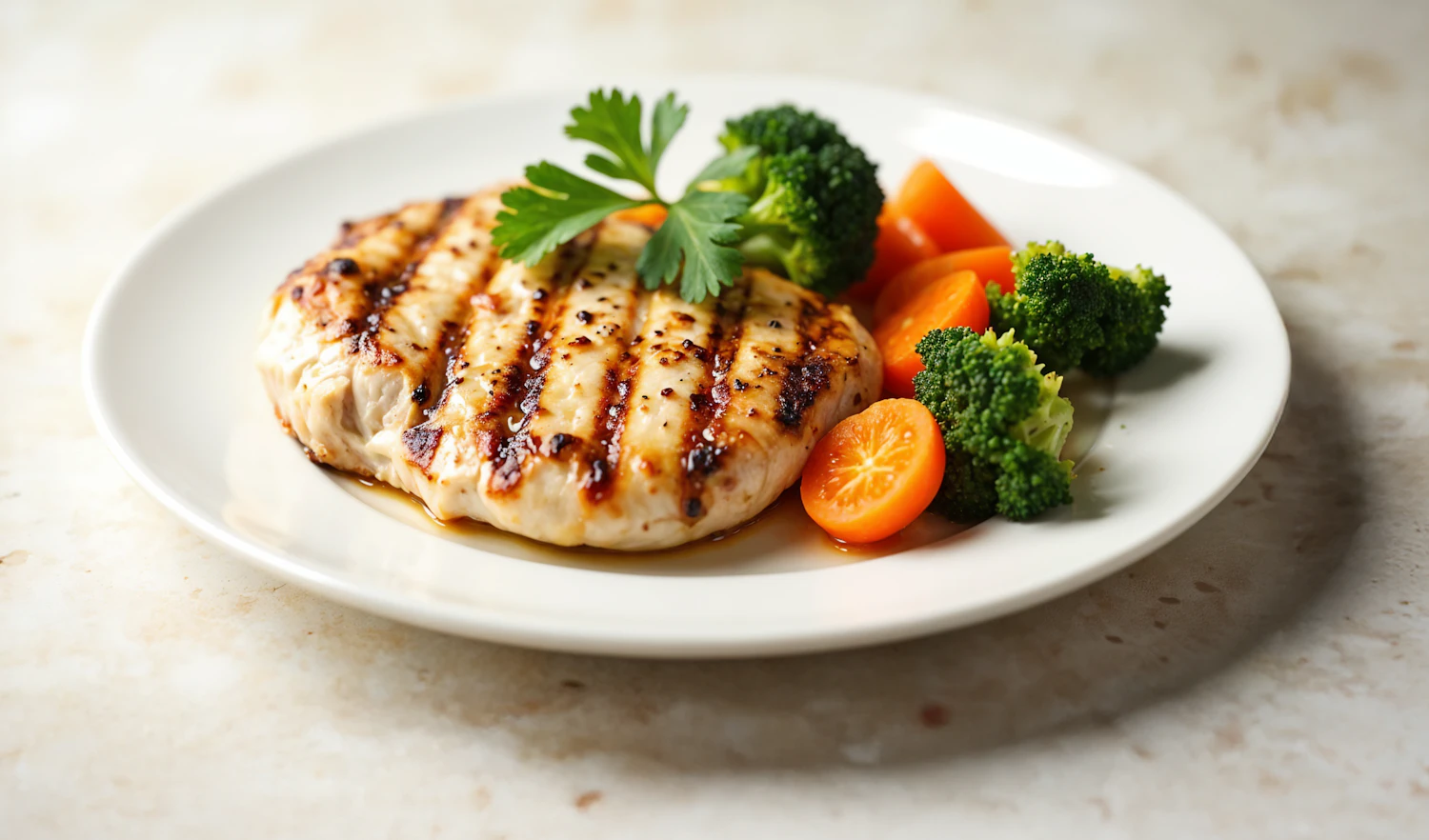
| Processed meats: bacon, hot dogs, deli meat | High in sodium and saturated fat; WHO's cancer agency classifies processed meat as a Group 1 carcinogen for colorectal cancer | Roasted chicken or turkey, canned tuna or salmon, eggs, hummus, or beans in sandwiches |
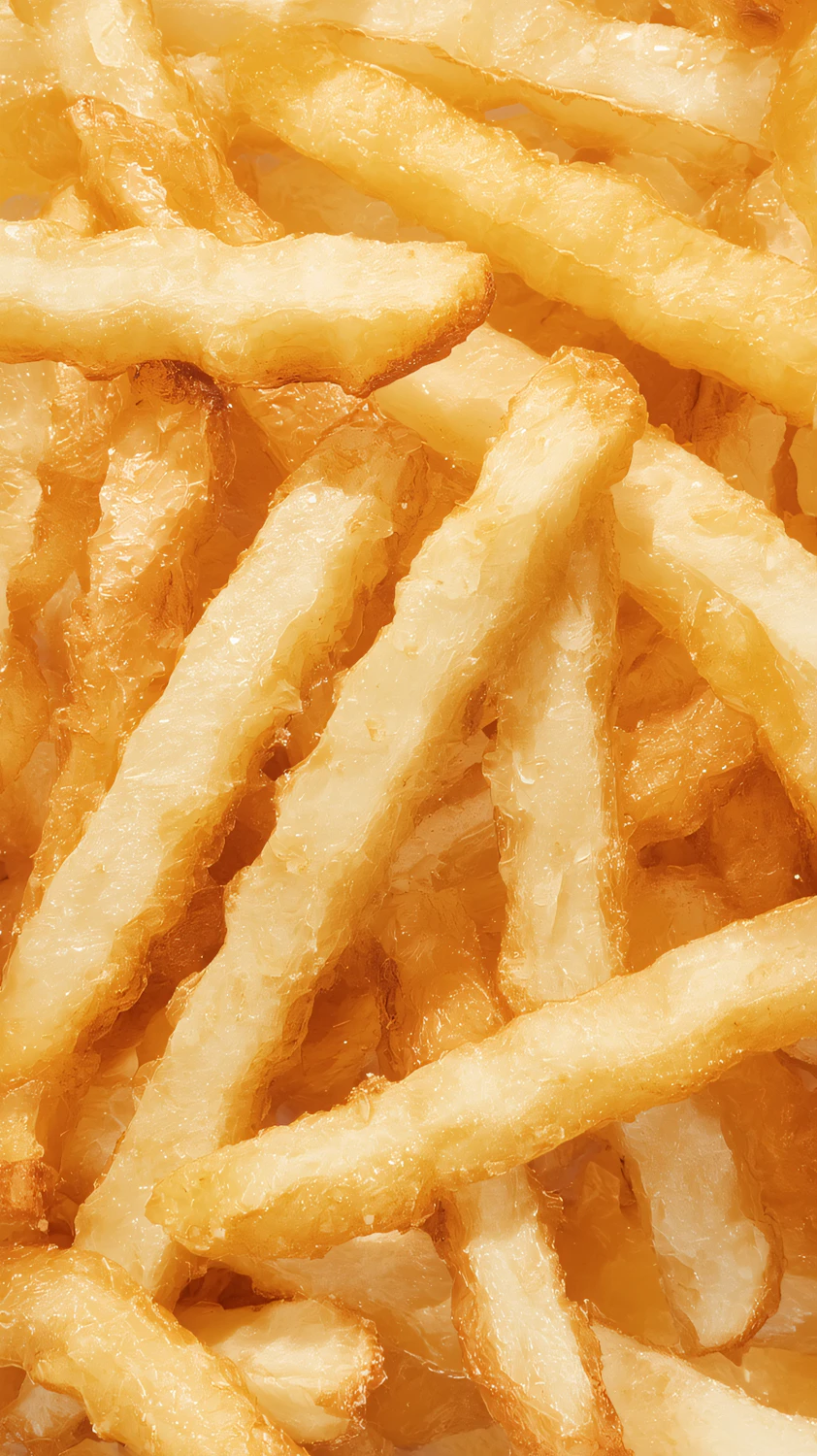
| Deep-fried fast food | Concentrates refined starch, sodium, and saturated fat in one meal | Grilled or roasted versions from the same menu; air-fried or oven-baked at home |
| Chips, salted crackers, and snack mixes | Sodium adds up quickly and the portion is hard to judge from a bag | Popcorn, nuts, roasted chickpeas, or the same chips portioned onto a plate |
| Canned soups and boxed skillet meals | One serving can take a large share of a 2,300 mg sodium day | Lower-sodium versions of the same product, or a soup base stretched with frozen vegetables and beans |
| Restaurant pizza and deli sandwiches | Bread, cured meat, and cheese stack sodium and saturated fat together | Thinner crust with vegetable toppings, half portions, or a homemade version with less cheese |
| Alcohol above moderate amounts | Adds calories with no nutrients, and health risk rises with the amount consumed | Fewer drinking days, smaller pours, alternating with water, or non-alcoholic options |
Why does frequency matter more than banning a food?
Because your health tracks the pattern of what you eat over months, not any individual meal. A hot dog at a ballgame is not a health event. Hot dogs four nights a week is a pattern, and patterns are what studies actually measure.
There is a practical reason too. Restriction of a specific food tends to increase its pull, and rules that require perfection collapse the first time life gets busy. A guideline you can follow at 80% every week beats one you follow at 100% for nine days.
Frequency and portion are also the two levers you can actually pull without changing anything else about your life. Halving how often you buy something, or buying a smaller size of it, requires no recipes, no tracking, and no announcement to anyone.
How do you actually shift the pattern?
Change the default, not your willpower. Most eating decisions are made by what is convenient and in front of you, so the useful moves happen at the store rather than at the table.
- Start with drinks. Sugar-sweetened beverages are usually the largest single source of added sugars, and swapping them requires no cooking.
- Buy the lower-sodium version of a product you already like. Same meal, less sodium, no effort.
- Add before you subtract. Put beans, vegetables, or fruit into meals you already eat. Fiber and volume displace other foods on their own.
- Downsize rather than eliminate. A small order or a single square of chocolate keeps the food in your life at a fraction of the cost.
- Make it a location decision. Foods eaten out of the house stay enjoyable and become automatically occasional.
- Cook one more meal a week than you do now. Canned beans and frozen vegetables count.
The CDC and the American Heart Association both emphasize the same order of operations: build the base of the diet from vegetables, fruit, whole grains, beans, and lean proteins, and the foods above naturally take up less room without being targeted.
Are any of these foods actually dangerous?
Not at the level of a single serving, with one exception worth naming. The risks discussed here are cumulative and probabilistic: eating processed meat frequently over years is associated with higher colorectal cancer risk, but a sandwich is not a dose of poison, and the added risk from occasional servings is small.
The exception is allergy. If a food triggers hives, swelling, wheezing, or vomiting, that is an immediate medical issue rather than a dietary pattern question. Call 911 for trouble breathing, throat tightness, swelling of the lips or tongue, widespread hives, faintness, or collapse after eating, which can signal anaphylaxis, a severe allergic reaction. Use prescribed epinephrine first if you have it.
Also get medical care promptly for chest pain or pressure, sudden severe headache, or sudden weakness or trouble speaking. Those are not diet questions.
Who should talk to a doctor or dietitian first?
Some people need targets different from the general population's, and general advice is the wrong tool.
- Anyone with high blood pressure, heart failure, or kidney disease, where a specific sodium and potassium plan may be needed.
- People with diabetes, especially on insulin or other glucose-lowering medication, since changing carbohydrate intake can change medication needs.
- People who are pregnant or breastfeeding, whose calorie and nutrient needs are higher, and for whom the Dietary Guidelines advise avoiding alcohol entirely.
- Anyone taking medications that interact with alcohol or grapefruit, or on a restricted diet for a diagnosed condition.
Ask your primary care provider for a referral to a registered dietitian nutritionist (RD or RDN), the credential that identifies a qualified nutrition professional in the United States. "Nutritionist" on its own is not a consistently regulated title, so the RD or RDN letters are what to look for.
When is cutting back a problem rather than a help?
When the effort to eat well starts costing you more than it returns. Guidance about food is meant to make eating easier, and there is a point where it stops doing that.
Warning signs worth taking seriously include a shrinking list of foods you feel able to eat, anxiety or guilt after ordinary meals, skipping meals to "make up" for a previous one, avoiding social events because of food, rigid rules that feel unbreakable, or thinking about food and body weight taking up much of your day. These patterns can occur at any body size and in any gender.
If that sounds familiar, talk to your primary care provider, and consider the free, confidential screening tool and referral resources from the National Eating Disorders Association. If you have thoughts of harming yourself, call or text 988 to reach the Suicide and Crisis Lifeline. Wanting to eat well is healthy; being afraid of food is a reason to get support, not to try harder.
What is the bottom line?
Keep the foods you like and change how often they show up. The Dietary Guidelines cap added sugars and saturated fat at under 10% of calories each, sodium at under 2,300 mg a day, and alcohol at no more than two drinks a day for men or one for women, and the ten foods above are simply the fastest ways to spend those budgets.
Start with drinks, buy the lower-sodium option, add fiber-rich foods to what you already cook, and let the rest happen through frequency rather than prohibition. That is a change you can still be making in a year.
Common questions
- What foods should I eat less often?
- Cut back on sugar-sweetened drinks, candy and pastries, sweetened cereals, processed meats such as bacon and deli meat, deep-fried fast food, salty packaged snacks, high-sodium canned and boxed meals, restaurant pizza and sandwiches, and alcohol beyond moderate amounts. These are the foods that deliver most of the added sugars, saturated fat, and sodium in the American diet.
- Are there foods I should never eat?
- No. The Dietary Guidelines for Americans set limits on added sugars, saturated fat, sodium, and alcohol rather than banning any food. Health outcomes track the overall pattern of eating over months, not individual meals. Framing foods as forbidden tends to increase their pull and makes eating harder to sustain, which is the opposite of what the guidance is for.
- How much added sugar is too much?
- The Dietary Guidelines for Americans advise keeping added sugars below 10% of daily calories. On the Nutrition Facts label, the Added Sugars line separates sugar put into a product from sugar naturally present in fruit or dairy. The FDA treats 5% Daily Value or less per serving as low and 20% or more as high, which is a fast way to compare products.
- Is processed meat really that bad?
- The World Health Organization’s cancer research agency classifies processed meat as a Group 1 carcinogen, meaning the evidence linking it to colorectal cancer is considered strong. That describes the strength of the evidence, not the size of the risk, which is small for occasional servings. Processed meats are also high in sodium and saturated fat, so less often is the sensible approach.
- What should I drink instead of soda?
- Water, sparkling or plain, is the simplest swap, and unsweetened iced tea, coffee, and water with citrus or fruit slices all work. If you like the ritual, a smaller serving of regular soda still cuts most of the added sugars. Diet sodas reduce added sugars, and the Dietary Guidelines treat them as one option rather than a recommendation.
- How do I lower sodium without food tasting bland?
- Most sodium in the American diet comes from packaged and restaurant food rather than the salt shaker, so the biggest wins come from buying lower-sodium versions of bread, soup, deli meat, and sauces. Cooking at home lets you use acid, herbs, garlic, and spices for flavor. Taste preference for salt adjusts over a few weeks of lower intake.
- What if thinking about food is making me anxious?
- That is a signal to get support rather than to restrict further. A shrinking list of foods you feel able to eat, guilt after ordinary meals, skipping meals to compensate, or avoiding social events because of food are worth raising with your primary care provider. The National Eating Disorders Association offers free, confidential screening and referral resources.
Sources
Published research and guidance this page draws on. Check the original where a detail matters to you.
- 1Dietary Guidelines for Americans, 2020-2025U.S. Departments of Agriculture and Health and Human Services
- 2MyPlate: what to eat more of, and how muchU.S. Department of Agriculture
- 3Food Labeling and Nutrition: added sugars and % Daily ValueU.S. Food and Drug Administration
- 4Salt and sodium: reducing intakeCenters for Disease Control and Prevention
- 5Healthy Eating and Physical Activity for LifeNational Institute of Diabetes and Digestive and Kidney Diseases (NIH)
- 6The American Heart Association Diet and Lifestyle RecommendationsAmerican Heart Association
- 7Healthy diet fact sheetWorld Health Organization
- 8Find a registered dietitian nutritionistAcademy of Nutrition and Dietetics
- 9Screening tool and eating disorder support resourcesNational Eating Disorders Association
- 10Nutrition: MedlinePlus health topicMedlinePlus, U.S. National Library of Medicine
This article is for general education and is not a substitute for professional medical advice. Speak with a qualified healthcare provider about your individual circumstances.
About HealthPathCore
An independent health knowledge library
Every article here is built from published research and guidance issued by named health bodies, written in plain language, and dated so you can see how current it is. When the evidence moves, we come back and correct the piece.
How we research and write