You Ate Moldy Bread: What Actually Happens
Accidentally eating a small amount of moldy bread rarely causes more than nausea in healthy adults. Here is why you cannot cut mold off bread, and when to worry.
The short answer
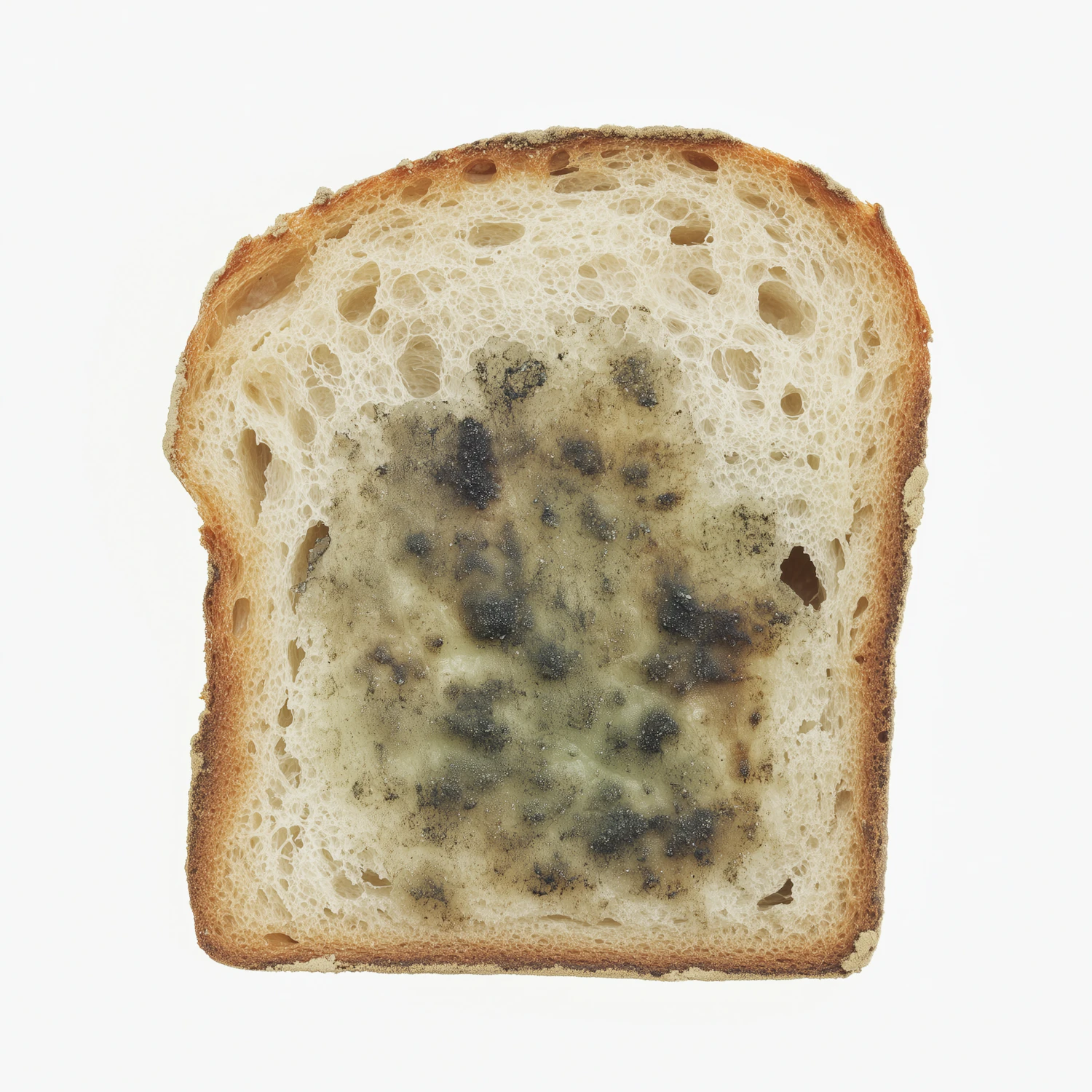
For most healthy adults, accidentally eating a small amount of moldy bread causes nothing worse than a bad taste or mild nausea. Spit out what remains, rinse your mouth, and discard the loaf. You cannot cut mold off bread, because the mold network spreads through porous food beyond the visible patch.
Key takeaways
- A single accidental bite of moldy bread rarely causes more than mild nausea in a healthy adult.
- You cannot make moldy bread safe by cutting the spot off, because mold threads spread through porous food past what you can see.
- The USDA advises discarding bread and baked goods with any visible mold rather than salvaging them.
- Mycotoxins, not the visible fuzz, are the real concern, and the recognized risk is chronic low-level exposure rather than one bite.
- Cooking, toasting, or baking does not destroy mycotoxins.
- Hard cheese and firm vegetables can be salvaged by cutting at least 1 inch around and below the mold; soft, moist foods cannot.
- People who are immunocompromised, pregnant, allergic to mold, very young, or elderly should be more cautious.
- Do not sniff a moldy item, because inhaling spores can trigger respiratory problems, especially with asthma.
If you just realized the bread you bit into had mold on it, here is the short answer: for most healthy adults, accidentally eating a small amount of moldy bread usually causes nothing worse than a bad taste and possibly some nausea. Serious illness from one bite is uncommon. Spit out what is still in your mouth, rinse, and get on with your day.
The longer answer is worth reading anyway, because two things people believe about bread mold are wrong. You cannot make moldy bread safe by cutting off the fuzzy part, and the reason to care about food mold at all is not the fuzz you can see but the toxins some molds produce.
What happens if you accidentally eat moldy bread?
Usually nothing, or a brief upset stomach. Most healthy adults who swallow a small piece of moldy bread experience no symptoms at all. Some get mild nausea, a little cramping, or one episode of loose stool within a few hours, and it passes.
Two things drive the risk: how much you ate and who you are. A single bite is a very different exposure from finishing a sandwich made from a visibly furry loaf, and a healthy adult is in a different position than someone who is immunocompromised, pregnant, or allergic to mold.
Reactions also vary by which mold species is growing, and there is no way to identify that by looking. Color tells you very little. Green, white, black, and blue-gray patches on bread can all be different organisms.
What to do right now: spit out what you can, rinse your mouth with water, throw away the rest of the loaf, and drink normally. There is no need to make yourself vomit, and you should not, because it adds risk without benefit. If you feel uneasy about the amount, Poison Control at 1-800-222-1222 is free, confidential, and answers 24 hours a day.
What is the mold growing on bread?
Mold is a type of fungus that grows as a network of microscopic threads. The visible fuzzy patch is only the fruiting part, the point at which the colony has grown enough to produce spores and become visible to the naked eye.
By the time you can see it, the colony has been there a while. Underneath the surface, the mold sends out root-like threads called hyphae that grow into the food itself. In bread they spread easily, because bread is porous, soft, and moist, exactly the environment a mold wants.
Mold spores are everywhere in the air, which is why bread molds without anyone doing anything wrong. Warmth and humidity speed it up, which is why a loaf lasts days longer in cold weather than in a humid kitchen in August.
Why can you not just cut the mold off bread?
Because in soft, porous foods the mold network runs well past the visible patch. The USDA advises discarding bread and baked goods with mold on them rather than trying to salvage them, and the reason is exactly this: the part you can see is not the boundary of the problem.
Density is what determines whether cutting works. In a hard, dense food such as a block of firm cheese or a firm carrot, the mold has trouble penetrating, so removing a generous margin gets rid of it. In bread the structure is full of air pockets and moisture, so the hyphae travel through it freely.
That means one moldy slice makes the loaf suspect, not just that slice. It is a few dollars against a food safety guess, and the USDA has already made the call.
One more piece of practical advice from the USDA: do not sniff the moldy item. Inhaling a face full of spores can cause respiratory problems, particularly if you have asthma or a mold allergy. Bag it and throw it out.
What are mycotoxins, and should you worry about them?
Mycotoxins are toxic compounds that some molds produce. They are the real reason food safety agencies care about mold, and they are not destroyed by normal cooking or baking, which is why heat does not rescue a moldy food.
The World Health Organization notes that mycotoxins are a global food safety issue, and among the best known are aflatoxins, produced by certain Aspergillus molds. These are found mainly in crops such as corn, peanuts, and tree nuts, and the FDA sets limits for them in the food supply.
Here is the important context. The recognized health concern with mycotoxins is chronic exposure at low levels over years, which is why regulation focuses on grain and nut supply rather than on individual loaves. A single accidental bite of moldy bread is not that kind of exposure, and it is very unlikely to deliver enough of anything to cause acute illness in a healthy adult.
That does not make bread mold harmless in general. It means the correct response is to throw out moldy food routinely, not to panic about one bite.
Which foods can you cut mold off, and which should you throw out?
The USDA publishes clear guidance on this, and it is the most useful thing to know. In short: hard and dense foods can often be salvaged by cutting well around the mold; soft, porous, and high-moisture foods should be discarded.
| Food | Cut off or discard? | Why |
|---|---|---|
| Bread and baked goods | Discard | Porous; mold threads spread through the loaf beyond what you can see |
| Hard cheese, such as cheddar or Parmesan (mold not part of the product) | Cut off at least 1 inch around and below the spot | Dense structure limits penetration; keep the knife out of the mold |
| Hard salami and dry-cured country hams | Scrub the surface mold off | Surface mold is normal on these products |
| Firm fruits and vegetables, such as cabbage, bell peppers, and carrots | Cut off at least 1 inch around and below | Low moisture and dense flesh resist spread |
| Soft fruits and vegetables, such as peaches, tomatoes, and cucumbers | Discard | High moisture allows mold to move through the flesh |
| Soft cheeses, such as cream cheese, cottage cheese, and ricotta | Discard | Moist and soft; contamination is not limited to the visible spot |
| Shredded, sliced, or crumbled cheese of any kind | Discard | Large surface area and possible cross-contamination in the package |
| Yogurt and sour cream | Discard | High moisture throughout |
| Jams and jellies | Discard | Mold can produce toxins that spread below the surface |
| Cooked leftovers, casseroles, grains, and pasta | Discard | Moist, and mold indicates other spoilage organisms may be present |
| Lunch meats, bacon, hot dogs, and cooked meat or poultry | Discard | Moist surfaces where bacteria grow alongside the mold |
| Peanut butter, nuts, and legumes | Discard | These are the foods most associated with aflatoxin-producing molds |
Cheeses that are made with mold on purpose, such as blue cheese, Brie, and Camembert, are a separate case. The mold that belongs there is fine; unexpected mold on a soft ripened cheese is a reason to discard it.
Who should be more careful about mold?
Some people should treat moldy food as more than a nuisance and should not take the same relaxed view of an accidental bite.
- People with a weakened immune system: including those receiving chemotherapy, organ transplant recipients, people on long-term steroids or immunosuppressive drugs, and people with advanced HIV. In these groups, molds that are harmless to others can occasionally cause invasive infection.
- People who are pregnant: an added reason to avoid unnecessary exposures, and to call an obstetric provider if any symptoms follow.
- People with asthma or a known mold allergy: the reaction can come from inhaling spores as much as from swallowing them. Wheezing, chest tightness, or a stuffy nose after handling a moldy loaf is worth attention.
- Infants and young children: a smaller body means the same amount is a proportionally bigger dose.
- Older adults: immune response is often less robust.
- Anyone who ate a large amount: dose genuinely matters here.
What symptoms mean you should see a doctor?
Most people need no medical care at all. Get help if symptoms are severe, persistent, or involve breathing.
- Vomiting or diarrhea that continues beyond about 24 hours, or that stops you keeping fluids down
- Signs of dehydration: very little urine, dizziness on standing, dry mouth, or unusual weakness
- Fever, chills, or symptoms that are getting worse rather than settling
- Severe or persistent abdominal pain
- Blood in vomit or stool
- Any symptoms at all in someone who is immunocompromised, pregnant, an infant, or elderly
Call 911 for trouble breathing, wheezing, throat tightness, swelling of the lips, tongue, or face, hives spreading over the body, or fainting. Those suggest a severe allergic reaction, which is an emergency.
For anything short of that, calling Poison Control at 1-800-222-1222 is a reasonable first step. It is free, confidential, available around the clock, and you do not need an emergency to justify the call.
How do you stop bread from going moldy?
Slow the mold down by controlling moisture, temperature, and air exposure. Mold spores are unavoidable, but the conditions they need are not.
- Buy smaller loaves if you do not go through a large one within a few days.
- Keep bread in a cool, dry spot, and out of direct sun and off a warm appliance.
- In hot or humid weather, refrigerate. Bread goes stale faster in the refrigerator but molds much more slowly, which is the better trade in August.
- Freeze what you will not eat within a few days. Sliced bread freezes well and toasts straight from frozen.
- Close the bag properly and keep damp hands out of it.
- Clean the bread box or storage container regularly, and replace it if mold keeps recurring there.
- Homemade and bakery bread without preservatives molds faster, so plan on freezing more of it.
If you find mold in your refrigerator, the USDA recommends cleaning the inside with a baking soda solution, rinsing, and checking nearby items, since spores spread easily in a closed space.
What is the bottom line?
One accidental bite of moldy bread is very unlikely to hurt a healthy adult. Spit out what you can, rinse, and throw away the loaf rather than trying to cut around the spot, because in a soft food the mold has already spread past what you can see. Be more careful if you are immunocompromised, pregnant, or allergic to mold, and get medical care for symptoms that are severe, worsening, or lasting more than a day. Poison Control at 1-800-222-1222 can advise, and 911 is the right call for any breathing difficulty.
Common questions
- Will I get sick if I ate moldy bread?
- Probably not. Most healthy adults who eat a small amount of moldy bread have no symptoms, and some get mild nausea or brief stomach upset that passes within a few hours. Risk rises with the amount eaten and if you are immunocompromised, pregnant, very young, elderly, or allergic to mold. Discard the rest of the loaf.
- How long after eating moldy bread will you feel sick?
- If symptoms occur at all, they usually appear within a few hours and are mild, typically nausea or brief stomach upset. Anything that starts later, lasts beyond about 24 hours, or comes with fever, severe pain, or blood is worth a doctor's evaluation. Trouble breathing or facial swelling means calling 911 immediately.
- Can you cut the mold off bread and eat the rest?
- No. Bread is porous and moist, so the root-like threads of the mold grow well beyond the visible patch into parts of the loaf that still look clean. The USDA advises discarding moldy bread and baked goods entirely. Cutting around mold only works on hard, dense foods such as firm cheese and firm vegetables.
- Does toasting bread kill mold?
- No. Toasting may kill some of the mold itself, but it does not destroy mycotoxins, the toxic compounds some molds produce, which are heat stable. Heating moldy food does not make it safe. The same applies to baking, boiling, and microwaving. Throw out the bread instead.
- Which foods can you cut mold off?
- According to the USDA, hard cheese, hard salami, dry-cured country ham, and firm fruits and vegetables such as cabbage, bell peppers, and carrots can be salvaged by removing at least 1 inch around and below the mold. Soft cheese, yogurt, jam, soft produce, leftovers, lunch meats, nuts, and bread should be discarded.
- Is moldy bread dangerous during pregnancy?
- A small accidental amount is unlikely to cause harm, but pregnancy is a good reason to be more cautious about unnecessary exposures and to avoid moldy food deliberately. If you have eaten a significant amount or develop any symptoms, call your obstetric provider. You can also call Poison Control at 1-800-222-1222 for free, confidential advice.
- What are the symptoms of mycotoxin exposure?
- Acute symptoms from food are uncommon and would generally involve nausea, vomiting, or abdominal pain. The recognized health concern with mycotoxins is chronic low-level exposure over years, which is why the FDA and WHO regulate levels in crops such as corn, peanuts, and tree nuts rather than focusing on single meals.
- How do you keep bread from getting moldy?
- Keep it cool, dry, and sealed. Store bread out of sun and away from warm appliances, refrigerate it in hot or humid weather, and freeze what you will not eat within a few days. Buy smaller loaves, keep damp hands out of the bag, and clean the bread box regularly if mold keeps recurring.
Sources
Published research and guidance this page draws on. Check the original where a detail matters to you.
- 1Molds on Food: Are They Dangerous?USDA Food Safety and Inspection Service
- 2Mycotoxins fact sheetWorld Health Organization
- 3Chemical Contaminants in Food, including aflatoxinsU.S. Food and Drug Administration
- 4MoldsMedlinePlus, National Library of Medicine
- 5About Mold and HealthCenters for Disease Control and Prevention
- 6Food SafetyMedlinePlus, National Library of Medicine
- 7Foodborne Illness: symptoms and when to seek careCenters for Disease Control and Prevention
- 8Poison Control: free, confidential help at 1-800-222-1222America's Poison Centers
- 9Food Allergies and ReactionsU.S. Food and Drug Administration
This article is for general education and is not a substitute for professional medical advice. Speak with a qualified healthcare provider about your individual circumstances.
About HealthPathCore
An independent health knowledge library
Every article here is built from published research and guidance issued by named health bodies, written in plain language, and dated so you can see how current it is. When the evidence moves, we come back and correct the piece.
How we research and write