Which Cardio Machine Is Best? A Side-by-Side Guide
Treadmill, elliptical, rower, bike, or stair climber: how the five main cardio machines compare on joint impact, muscles worked, and who each one suits.
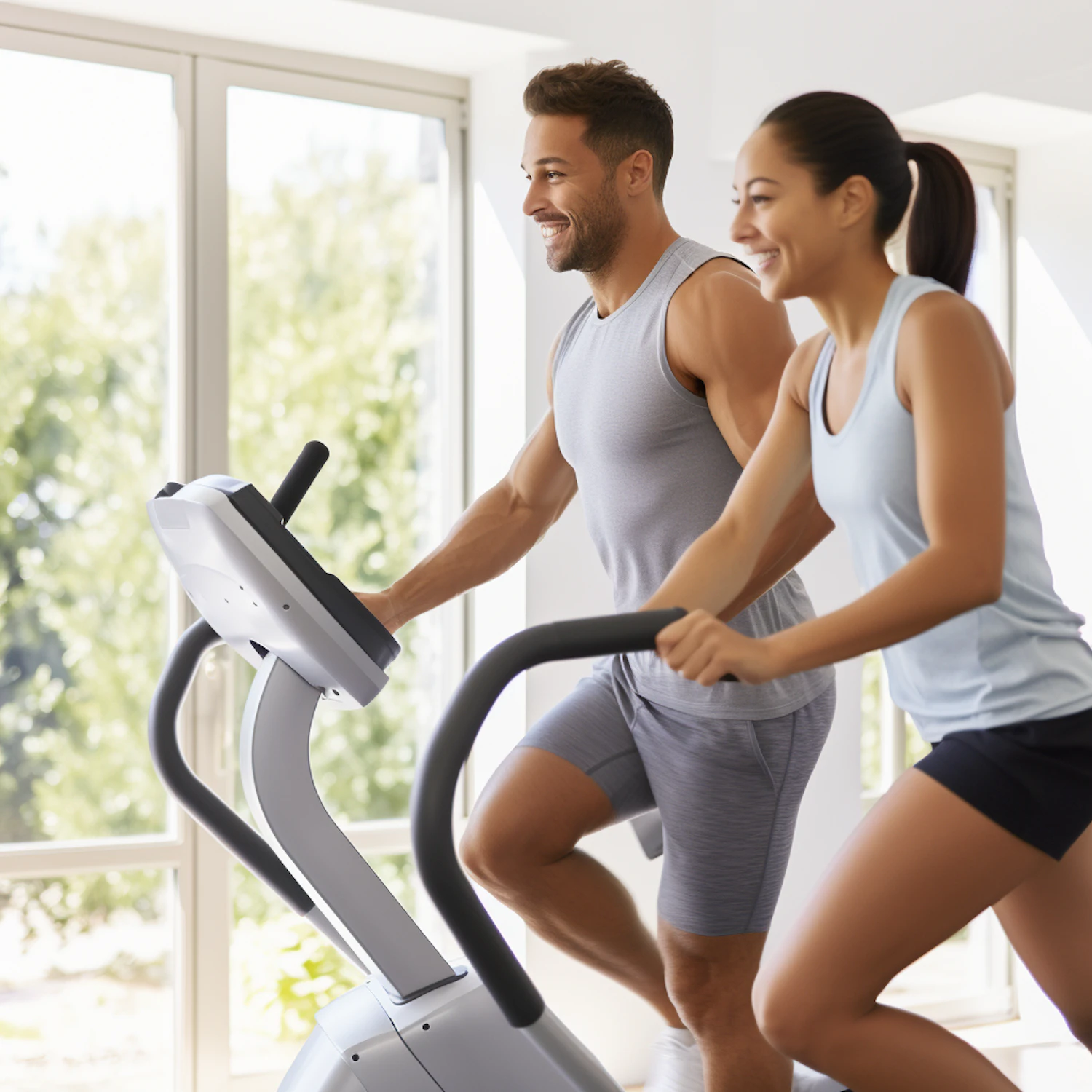
The short answer
No cardio machine is best for everyone. The right one matches your joints, the muscles you want to work, and how likely you are to use it three or more times a week. Treadmills add bone-loading impact, bikes and ellipticals spare the joints, and rowers involve the most muscle at once.
Key takeaways
- The Physical Activity Guidelines for Americans measure minutes and intensity, not equipment, so any cardio machine can meet the 150 to 300 weekly moderate minutes.
- Stationary bikes remove impact entirely because the seat carries your body weight, which makes them the usual starting point for knee, hip, or back pain.
- Rowing involves the most muscle of any common machine but has the steepest learning curve, and a rounded lower back is its main injury risk.
- Treadmill walking on an incline keeps intensity high while staying low-impact and preserves the weight-bearing benefit for bone that seated machines lack.
- Calorie readouts on cardio machines are estimates from generic formulas and are best used to compare your own sessions rather than as measurements.
- Rotating between two or three machines spreads load across different joints and reduces the boredom that ends most exercise routines.
- Use the talk test to set intensity: at moderate intensity you can speak in full sentences but cannot sing.
- Stop the machine and call 911 for chest pain or pressure, sudden severe shortness of breath, or fainting.
Walk into any gym and a row of machines each promise to improve your cardiovascular fitness: treadmills, stationary bikes, ellipticals, rowing machines, stair climbers. They all work. The question worth answering is not which is best in the abstract, but which one suits your joints, your goals, and your odds of coming back to it next week.
Which cardio machine is best overall?
There is no single best machine. Every option on the gym floor can deliver moderate or vigorous aerobic activity, which is the thing the Physical Activity Guidelines for Americans actually measure, 150 to 300 minutes of moderate-intensity aerobic activity a week, or 75 to 150 minutes of vigorous-intensity activity, plus muscle-strengthening on 2 or more days a week.
The guidelines do not name equipment. They care about intensity and minutes, which means the machine is a delivery method and the differences between them are about comfort, joint load, muscle involvement, and enjoyment.
Three questions usually settle it. Do your knees, hips, and back tolerate impact? Do you want upper body involvement? And will you honestly get on this machine three or more times a week? The last one decides more outcomes than the first two.
How do the five main machines compare?
The clearest differences are joint impact, how much muscle is involved, and how much technique you need before the machine is useful. Here is the comparison in one place.
| Machine | Joint impact | Muscles worked | Learning curve | Who it suits |
|---|---|---|---|---|
| Treadmill | High when running; low to moderate when walking, including on an incline | Legs, hips, core; weight-bearing, so it loads bone | Very low, walking needs no instruction | People with healthy joints who want bone-loading impact, and anyone who wants to walk indoors |
| Elliptical | Low, feet stay in contact with the pedals | Legs and glutes, plus arms and chest if you push and pull the handles | Low, but easy to coast by leaning on the handles | People who want a running-like motion without pounding |
| Rowing machine | Low | The most of any machine here: legs, glutes, back, arms, core in one sequence | High, the drive order takes practice | People willing to learn form for the most complete option |
| Stationary bike (upright) | Very low, the seat carries your weight | Quads, glutes, calves; minimal upper body | Very low | Knee, hip, or ankle pain; long sessions; anyone starting out |
| Stationary bike (recumbent) | Lowest, reclined seat with back support | Quads, glutes, hamstrings; minimal upper body and core | Very low | Back pain, balance concerns, older adults, early rehab |
| Stair climber | Moderate, demanding on knees and hips over long sessions | Glutes, quads, hamstrings, calves; weight-bearing | Low, but hard to hold good posture when tired | People already reasonably fit who want intensity from a small footprint |
Read that table as a fit test, not a ranking. The rower involves the most muscle, but a rower used badly twice and then abandoned beats nothing by very little.
Which machine is best if you have knee, hip, or back pain?
Start with a stationary bike, and choose recumbent if your back is the problem. Both remove impact entirely because the seat supports your body weight, and the recumbent version adds back support and a more stable position.
The elliptical is the next step up: your feet never leave the pedals, so there is no landing force, while the movement still feels like striding. Some people find the fixed path uncomfortable if it does not match their stride, which is worth testing before committing.
Rowing is low-impact but not automatically joint-friendly. It loads the lower back through the hinge and the knees through deep flexion at the catch, so poor form or an aggressive resistance setting can aggravate exactly what you were avoiding.
Treadmill walking on an incline is a genuinely underrated option here. It stays low-impact, raises intensity without speed, and keeps the weight-bearing benefit for bone that seated machines cannot offer. The National Institute of Arthritis and Musculoskeletal and Skin Diseases points to low-impact activity as generally appropriate for people with joint conditions, though what is right for your specific joint is a conversation with your doctor or physical therapist.
Which cardio machine burns the most calories?
Whichever one you work hardest on for the longest. Energy cost is driven by how much muscle is working and how hard, not by the brand of machine, so a hard session on a bike outpaces an easy session on a rower every time.
All else being equal, machines that involve more muscle and that support less of your body weight tend to cost more energy at a given perceived effort, running, rowing, and stair climbing sit at the higher end, and seated cycling at the lower end. But "all else equal" almost never holds, because people do not work equally hard on machines they dislike.
Treat the calorie display as an estimate. Machine readouts are generated from generic formulas using speed, resistance, and sometimes your entered weight or a grip heart-rate sensor. They cannot see your actual body composition or efficiency, they often do not subtract the calories you would have burned resting anyway, and two machines side by side will disagree about the same effort.
They are still useful for one thing: comparing your own sessions on the same machine over time. If last month's 20 minutes read 180 and this month's reads 220, something improved, even if neither number is literally true.
Which machine is best for beginners?
A treadmill set to a brisk walk, or an upright bike. Both need essentially no instruction, both let you control intensity precisely, and neither punishes you for a bad first session.
If you are new to structured exercise, the pattern that works is unglamorous: pick a machine, start at a pace where you can talk in full sentences but not sing, and go for 10 to 20 minutes. That talk test is the CDC's simple way to check you are at moderate intensity without a heart-rate monitor.
Hold off on the stair climber and on interval sessions until you have a few weeks of consistent moderate work behind you. The stair climber in particular raises heart rate quickly and is hard to hold good posture on when you tire, which is when people start hanging off the handrails and stop training their legs.
Rowing is worth learning early if you want it, but learn it on low resistance in short pieces rather than by rowing for 30 minutes on day one.
How long should you spend on a cardio machine?
Long enough that your weekly minutes add up to the guideline: 150 to 300 minutes of moderate activity, or 75 to 150 vigorous, however you choose to divide it. A common shape is 30 minutes on five days, or 20 to 25 minutes of harder work three times a week.
The second edition of the guidelines removed the old rule that activity had to come in blocks of at least 10 minutes, so a 12-minute session before work is not wasted. Every minute counts toward the total.
If you are building up, add roughly 10 percent to your weekly total at a time rather than jumping. Most machine-related complaints, knee pain on the stair climber, shin pain on the treadmill, low back soreness from rowing, are volume problems rather than machine problems.
Should you stick with one machine or rotate between them?
Rotating is usually the better default. Using two or three machines spreads load across different joints and movement patterns, which reduces repetitive strain, and it keeps sessions from becoming monotonous, boredom is one of the most common reasons people stop exercising altogether.
There is one good reason to specialize: if you are training for something specific, like a 5K or a rowing event, the machine that matches the event should dominate your week. Fitness gains carry over between machines, but not perfectly.
A simple rotation that covers most bases is one impact session (treadmill), one low-impact session (bike or elliptical), and one full-body session (rower), plus your two strength days. That satisfies both halves of the guidelines and gives every joint a break.
How do you use each machine with good form?
Form problems on cardio machines are mostly about not leaning on things. Here is the short version for each.
Treadmill
- Clip on the safety key before you start, every time.
- Let go of the handrails once you are moving; holding on reduces the work and distorts your gait.
- Look ahead, not down at your feet or the console.
- Raise incline rather than speed if you want more intensity with less impact.
- Step onto the side rails to stop rather than jumping off a moving belt.
Elliptical
- Stand tall with your weight through your whole foot, not your toes.
- Push and pull the moving handles actively instead of resting your arms on them.
- Keep resistance high enough that the pedals do not fly around under you.
Rowing machine
- Drive with your legs first, then swing the torso back, then pull the handle to your lower ribs.
- Reverse that order on the way back: arms, then torso, then knees bend.
- Keep a flat back throughout, rounding the lower back under load is the main injury risk.
- Start on a low damper setting; a high setting is not a harder workout, just a heavier stroke.
Stationary bike
- Set saddle height so your knee has a slight bend at the bottom of the pedal stroke.
- Keep resistance high enough that you are not spinning with no tension.
- Avoid gripping the handlebars hard or hunching your shoulders.
Stair climber
- Use the rails for light balance only; supporting your weight removes most of the work.
- Stand upright rather than leaning forward onto the console.
- Place your whole foot on the step instead of just the ball of your foot.
When should you stop and call your doctor?
Stop the machine immediately and call 911 if you have chest pain, pressure, tightness, or squeezing; sudden severe shortness of breath; or you faint or nearly faint. Discomfort spreading to the arm, jaw, neck, or back, a cold sweat, or sudden nausea with any of these can be signs of a heart attack, and the American Heart Association advises calling 911 rather than driving yourself.
Sudden weakness or numbness on one side, sudden trouble speaking or understanding speech, or a sudden severe headache are stroke warning signs and also mean 911.
Talk to your doctor before starting or increasing cardio training if you:
- have a known heart, lung, or kidney condition, or diabetes
- notice a racing, pounding, or irregular heartbeat during or after sessions
- get more breathless than usual for the effort you are making
- have joint pain that lasts beyond the session or worsens week to week
- have had a recent injury, surgery, or joint replacement
- have been inactive for a long time and plan to start vigorous training
Ordinary muscle soreness for a day or two after a new activity is expected. Sharp pain during a movement, swelling, or numbness and tingling into a limb are not, and they are worth a call rather than another session.
So which one should you choose?
Choose the machine whose impact level your joints tolerate, then among those, the one you find least unpleasant. That is a lower bar than "best," and it produces better results, because the outcome depends on the number of sessions rather than the equipment.
If you want one recommendation to act on today: walk briskly on a treadmill at an incline, or ride an upright bike, for 20 to 30 minutes three times this week at a pace where you can talk but not sing. Add a rower or elliptical once that feels routine, and put two strength sessions around them.
Common questions
- Which cardio machine burns the most calories?
- Whichever one you work hardest on for longest. Energy cost depends on how much muscle is working and how hard, so a hard bike session beats an easy rowing session. Machines that involve more muscle and support less of your weight, such as treadmills, rowers, and stair climbers, tend to cost more at the same perceived effort.
- Is the treadmill or the elliptical better for your knees?
- The elliptical is generally gentler because your feet never leave the pedals, so there is no landing force. Treadmill walking, especially on an incline, is also low-impact and adds weight-bearing benefit for bone. Treadmill running is the high-impact option. If a fixed elliptical stride feels awkward for your hips, incline walking is often the better fit.
- What is the best cardio machine for beginners?
- A treadmill set to a brisk walk, or an upright stationary bike. Both need almost no instruction, let you adjust intensity precisely, and are forgiving of a bad first session. Start with 10 to 20 minutes at a pace where you can talk in full sentences but not sing, and build up gradually over several weeks.
- Is a rowing machine good for beginners?
- It can be, but only if you learn the sequence first. Rowing is low-impact and works legs, back, arms, and core together, yet the drive order takes practice and rounding your lower back under load risks strain. Start on a low damper setting with short pieces, focusing on legs, then torso, then arms, before adding time.
- How long should I do cardio each session?
- Anything that adds up to 150 to 300 moderate minutes or 75 to 150 vigorous minutes a week works. Thirty minutes on five days is a common shape. The current guidelines removed the old 10-minute minimum block, so shorter sessions count fully. Increase your weekly total by roughly 10 percent at a time to avoid overuse problems.
- Should I use the same cardio machine every day?
- Rotating between two or three is usually better. It spreads load across different joints and movement patterns, which reduces repetitive strain, and it limits the boredom that ends many routines. Specializing makes sense if you are training for a specific event, since fitness carries over between machines but not perfectly.
- Do cardio machines count as strength training?
- Not on their own. The Physical Activity Guidelines for Americans treat aerobic and muscle-strengthening activity as separate requirements, and ask for strengthening work on 2 or more days a week. Rowing and stair climbing involve more muscle than cycling, but they still do not replace resistance training with weights, bands, or bodyweight exercises.
Sources
Published research and guidance this page draws on. Check the original where a detail matters to you.
- 1Physical Activity Guidelines for Americans, 2nd editionUS Department of Health and Human Services
- 2Physical Activity Guidelines for Americanshealth.gov, US Department of Health and Human Services
- 3Adult Activity: An OverviewCenters for Disease Control and Prevention
- 4Benefits of Physical ActivityCenters for Disease Control and Prevention
- 5Physical Activity and Your HeartNational Heart, Lung, and Blood Institute
- 6Sports InjuriesNational Institute of Arthritis and Musculoskeletal and Skin Diseases
- 7Exercise and Physical ActivityNational Institute on Aging
- 8Exercise and Physical FitnessMedlinePlus, National Library of Medicine
- 9American Heart Association Recommendations for Physical Activity in Adults and KidsAmerican Heart Association
- 10Warning Signs of a Heart AttackAmerican Heart Association
This article is for general education and is not a substitute for professional medical advice. Speak with a qualified healthcare provider about your individual circumstances.
About HealthPathCore
An independent health knowledge library
Every article here is built from published research and guidance issued by named health bodies, written in plain language, and dated so you can see how current it is. When the evidence moves, we come back and correct the piece.
How we research and write