Neck Pain From Sleeping: Causes and Fixes
Woke up with a stiff neck? Learn why sleeping causes neck pain, how your pillow and position matter, simple fixes that may help, and the red flags that need a doctor.
The short answer
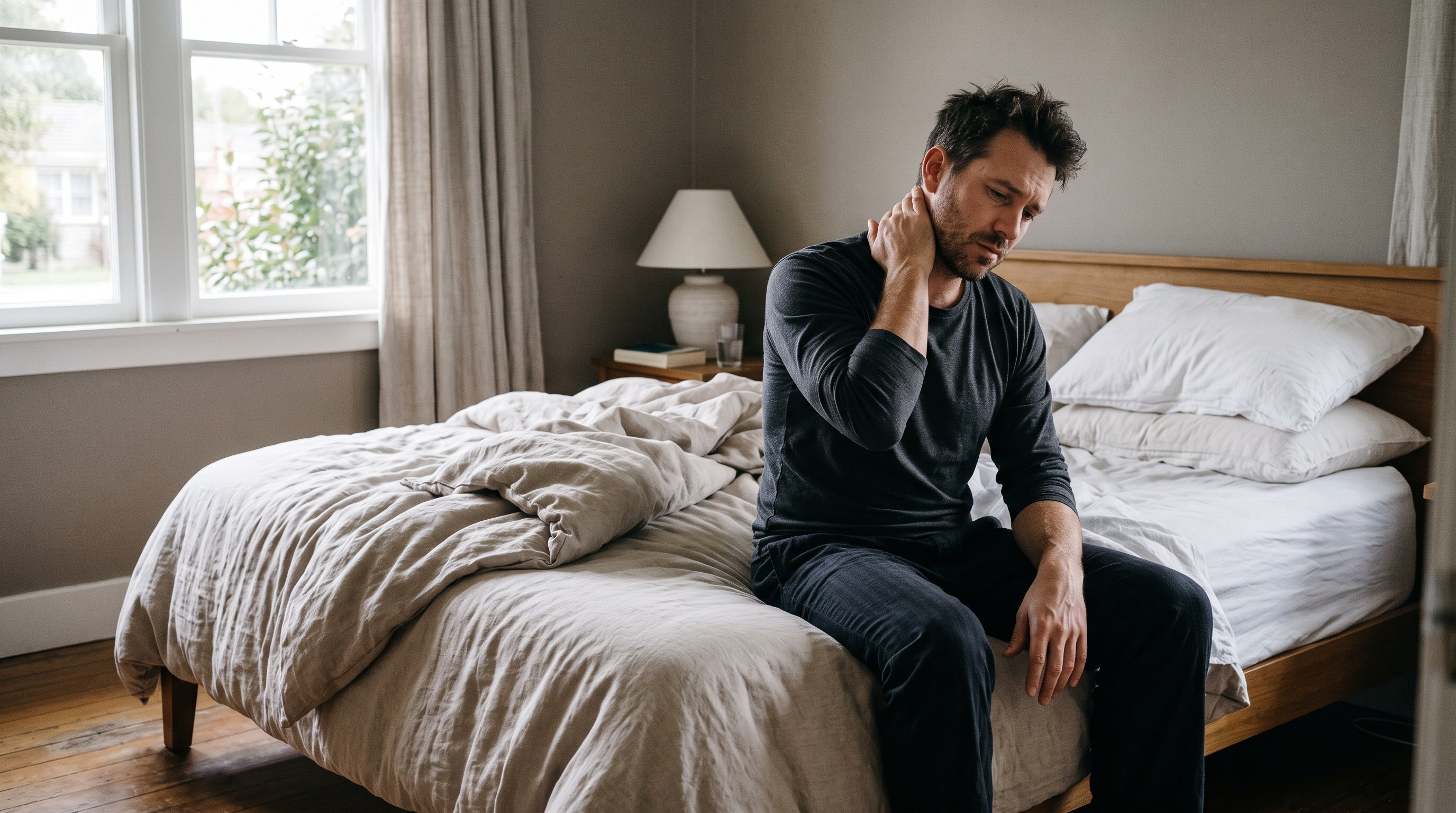
Neck pain from sleeping is usually a muscle strain caused by holding your neck at an awkward angle for hours, often from stomach sleeping or a pillow that is too high or too flat. It typically eases within a few days with gentle movement and heat. See a doctor if it lasts beyond a week.
Key takeaways
- Most neck pain after sleeping is a muscle strain from holding the neck at an awkward angle for hours.
- Stomach sleeping is the position most likely to strain the neck because the head is turned to one side.
- Back sleepers usually need a lower pillow, while side sleepers need a thicker one that fills the gap to the shoulder.
- A simple stiff neck usually improves within a few days with gentle movement, heat or ice, and over-the-counter pain relief.
- Daytime posture, screen use, and stress can leave neck muscles tight before you even go to bed.
- See a doctor if neck pain lasts more than a week or spreads into the arm with numbness or weakness.
- Call 911 for a stiff neck with fever and headache, a sudden severe headache, or signs of stroke.
You went to bed feeling fine and woke up unable to turn your head. A stiff, sore neck after sleep is one of the most common aches there is, and it can make the whole day feel off, from checking your blind spot while driving to looking down at your phone.
Most of the time the cause is simple: your neck spent hours in a position it did not like. This article explains why it happens, how to tell an ordinary stiff neck from something that needs attention, and the changes to your pillow, position, and habits that may help. It can help you understand what is likely going on, but it cannot diagnose you.
Why does my neck hurt after sleeping?
Most neck pain after sleep comes from strained muscles or irritated joints in the neck after it was held at an awkward angle for a long time. Your neck supports the weight of your head all day, and at night it relies on your pillow and position to stay in a neutral line with the rest of your spine.
When the head is tipped too far up, down, or to the side for hours, the muscles on one side stay stretched while those on the other stay shortened. By morning they can be tight, sore, and reluctant to move. MedlinePlus notes that neck pain is very often caused by muscle strain and poor posture, including the way you sleep. Neck aches are part of the wider picture of everyday physical health, and most are short-lived.
What are the most common causes of neck pain from sleeping?
The usual causes are sleep position, the wrong pillow, an unsupportive mattress, and daytime strain that shows up overnight. The table below summarizes them.
| Cause | How it strains the neck | What to try |
|---|---|---|
| Stomach sleeping | Your head is turned fully to one side for hours | Train yourself toward back or side sleeping |
| Pillow too high | Pushes your head forward or sideways | Use a lower or adjustable pillow |
| Pillow too flat or worn out | Lets your head drop out of line | Replace it or add support |
| Sagging mattress | Throws the whole spine out of alignment | Check whether it dips in the middle |
| Falling asleep sitting up | Head drops forward or to the side | Use a travel pillow or move to bed |
| Daytime posture and screen use | Muscles are already tight before bed | Break up long sitting with movement |
| Stress and jaw clenching | Tension in the neck and shoulders | Wind down before bed |
| Wear and tear in the spine | Stiffness, often worse in the morning | Gentle movement; see your doctor if persistent |
Which sleeping position is best for your neck?
Back and side sleeping are generally easiest on the neck, while stomach sleeping is the hardest. The goal in any position is to keep your head roughly in line with your spine, not tilted up, down, or twisted.
Back sleeping
Lying on your back lets your neck rest in a neutral position if the pillow supports the natural curve of your neck without pushing your chin toward your chest. A fairly thin pillow, or one with a little extra support under the neck, usually works best.
Side sleeping
Side sleeping is also neck-friendly, but it needs a thicker pillow to fill the gap between your ear and the mattress. If the pillow is too thin, your head drops toward the bed. If it is too thick, your head tilts up. Your nose should line up roughly with the center of your body.
Stomach sleeping
Sleeping on your stomach forces you to turn your head fully to one side for hours, which is a common cause of a stiff neck on waking. If you cannot sleep any other way, a very flat pillow or none at all reduces the strain. Many people switch over time by starting on their side with a pillow hugged against the chest.
How do you choose a pillow that does not hurt your neck?
Pick a pillow that keeps your head level with your spine in the position you sleep in most. There is no single best pillow, because the right height depends on your build and how you sleep.
| Sleep position | Pillow height | What to look for |
|---|---|---|
| Back | Low to medium | Supports the neck curve without pushing the chin down |
| Side | Medium to high | Fills the space between shoulder and ear |
| Stomach | Very low or none | Keeps the head from tilting up |
| Combination | Medium, adjustable | Fill that can be added or removed |
A few practical checks help. If you fold your pillow in half and it does not spring back, it has likely lost its support. If you wake up with your arm under the pillow, it may be too low. Contoured or memory foam pillows work well for some people, but the evidence does not show that any one type is best for everyone, so comfort and alignment are the guide.
Can daytime habits cause neck pain at night?
Yes. Many stiff necks blamed on a bad night actually start during the day. Hours spent looking down at a phone or leaning toward a screen load the neck muscles, and they may tighten further overnight.
If you sit for long stretches, the habits in posture and mobility for sitting all day can lower the tension you carry into bed. Stress plays a role too: people often hold tension in their shoulders and clench their jaw during sleep. Poor sleep and pain can also feed each other, and if you lie awake a lot, it may help to look at why you cannot fall asleep.
Neck tension is also closely tied to headaches. Tight neck and shoulder muscles are linked with tension-type headaches, so if your stiff neck comes with a band of pressure around your head, the comparison of tension headaches and migraines may be useful.
How can you relieve neck pain from sleeping?
Most stiff necks from sleeping improve within a few days with simple self-care. MedlinePlus suggests over-the-counter pain relievers, heat or ice, and gentle movement for common neck pain.
- Keep moving gently. Slowly turn your head side to side and tilt your ear toward your shoulder within a comfortable range. Total rest tends to make stiffness last longer.
- Use heat or cold. Ice may help in the first day or two, and heat, such as a warm shower or heating pad on a low setting, often loosens tight muscles afterward.
- Consider an over-the-counter pain reliever such as ibuprofen or acetaminophen, following the label. Check with your doctor or pharmacist if you have stomach, kidney, liver, or heart problems or take other medicines.
- Adjust your setup tonight. Change your pillow height or sleep position so you do not repeat the strain.
- Take screen breaks. Raise your phone or monitor closer to eye level.
- Try light stretches. Gentle shoulder rolls and chin tucks, where you slide your chin straight back as if making a double chin, may ease tension. Stop if anything causes sharp pain.
Avoid sudden forceful cracking or twisting of your neck. If you want to try massage or manual therapy, a licensed professional is the safer choice.
Does your mattress matter for neck pain?
Yes, your mattress affects your neck because it shapes how the rest of your spine lines up beneath your head. A mattress that sags in the middle lets your hips and shoulders sink, which can tilt your neck out of line even if your pillow is right.
There is no single best firmness for everyone. Many people with neck or back pain do well on a medium-firm mattress that supports the body while letting the shoulders and hips sink slightly, but comfort varies with body size and sleep position. Side sleepers often prefer a little more give at the shoulder, while back sleepers may want firmer support.
Signs that your mattress may be contributing include a visible dip where you sleep, waking stiffer than you went to bed, and sleeping better in a hotel or guest bed. Before buying a new mattress, try changing your pillow and position first, since those are cheaper fixes and often enough. If you share a bed, a mattress that sags toward one side can also push you into awkward positions overnight.
How long should neck pain from sleeping last?
A simple stiff neck from sleeping usually improves within a few days and is often gone within a week. It is common for it to feel worst in the morning and loosen as you move around.
Pain that keeps coming back every morning suggests something in your sleep setup is still wrong, such as a worn pillow or a sagging mattress. Pain that lasts more than a week or two, or that is getting worse rather than better, deserves a visit to your doctor. Back pain often follows similar patterns, and some of the same causes appear in common lower back pain causes.
When should you see a doctor or call 911?
See your doctor or primary care provider if neck pain lasts more than a week, keeps returning, is severe, or comes with symptoms that suggest a nerve is involved. Make an appointment if you have:
- Pain, numbness, tingling, or weakness spreading into your arm or hand.
- Pain that wakes you at night or does not ease with rest and position changes.
- Swollen glands, a lump in the neck, or unexplained weight loss.
- Neck pain after a fall, car crash, or other injury.
Red flags that need emergency care
Call 911 or go to the emergency room if a stiff neck comes with any of these:
- Fever, headache, and a stiff neck together, especially with confusion, sensitivity to light, or a rash. These can be signs of meningitis, an infection of the lining around the brain and spinal cord, which needs urgent treatment.
- A sudden, severe headache, often described as the worst of your life.
- Weakness, numbness, or drooping on one side of the face or body, trouble speaking, or loss of balance, which can be signs of a stroke.
- Neck or jaw pain with chest pain, shortness of breath, or sweating, which can be a sign of a heart attack.
- Loss of bladder or bowel control, or weakness in both arms or legs.
These situations are rare compared with an ordinary stiff neck, but they are the reason not to ignore unusual symptoms. For most people, a better pillow, a kinder sleep position, and some gentle movement are all it takes to wake up without the ache.
Common questions
- Why do I wake up with a stiff neck?
- Waking up with a stiff neck usually means your neck was held at an awkward angle for hours, which strains the muscles. Common culprits are sleeping on your stomach, a pillow that is too high or too flat, a sagging mattress, or tension carried over from the day. It usually eases within a few days with gentle movement.
- How do I get rid of neck pain from sleeping wrong?
- Keep your neck moving gently within a comfortable range, use ice early and heat afterward, and consider an over-the-counter pain reliever following the label. Gentle chin tucks and shoulder rolls may help. Then fix the cause by adjusting your pillow height or sleep position so the strain does not repeat the next night.
- What is the best sleeping position for neck pain?
- Back and side sleeping are generally best for the neck. On your back, use a low pillow that supports the neck curve. On your side, use a thicker pillow so your head stays level with your spine. Stomach sleeping is the hardest on the neck because your head is turned to one side for hours.
- How long does a stiff neck from sleeping last?
- A stiff neck from sleeping usually improves within a few days and often clears up within a week. It tends to feel worst in the morning and loosen as you move. If it lasts more than a week or two, keeps coming back, or gets worse, talk to your doctor to check for other causes.
- Can a bad pillow cause neck pain?
- Yes. A pillow that is too high, too flat, or worn out can tip your head out of line with your spine for hours, which strains the neck. The right height depends on how you sleep. If your pillow does not spring back when folded in half, it has probably lost its support and may need replacing.
- When is a stiff neck serious?
- A stiff neck is serious when it comes with fever and headache, confusion, sensitivity to light, or a rash, which can signal meningitis. A sudden severe headache, one-sided weakness, trouble speaking, or chest pain also need emergency care. Call 911 for any of these. Pain with arm numbness or weakness needs a prompt doctor visit.
Sources
Published research and guidance this page draws on. Check the original where a detail matters to you.
- 1Neck Injuries and DisordersMedlinePlus
- 2Neck painMedlinePlus Medical Encyclopedia
- 3Cervical spondylosisMedlinePlus Medical Encyclopedia
- 4MeningitisMedlinePlus
- 5Signs and Symptoms of StrokeCenters for Disease Control and Prevention
- 6Heart AttackMedlinePlus
- 7About SleepCenters for Disease Control and Prevention
This article is for general education and is not a substitute for professional medical advice. Speak with a qualified healthcare provider about your individual circumstances.
About HealthPathCore
An independent health knowledge library
Every article here is built from published research and guidance issued by named health bodies, written in plain language, and dated so you can see how current it is. When the evidence moves, we come back and correct the piece.
How we research and write